
Contractors need more than a way to “take a payment.” They need a reliable system for deposits, progress payments, change orders, final balances, online invoices, ACH payments, card payments, and clean payment records. When a project moves quickly, waiting on checks or manually chasing payments can slow down cash flow and create unnecessary back-office work.
That is where payment gateways for contractors become valuable. A gateway gives contractors a secure way to accept digital payments from clients through invoices, payment links, websites, mobile devices, or billing portals.
It helps make payment collection easier for remodelers, builders, subcontractors, tradespeople, and project managers who need flexibility across job sites, offices, and remote client communication.
Contracting work often involves high-ticket invoices, staged billing, deposits before work begins, material purchases, and change orders that need approval and payment before the next phase can move forward. A contractor online payment gateway can support these workflows by giving clients convenient options to pay by card, ACH, or other digital methods.
Payment security also matters. Contractors should not collect card details through text messages, paper notes, or unsecured emails. A secure payment gateway helps protect client payment data, reduce manual handling, and create transaction records that support accounting, reconciliation, and dispute prevention.
What Are Payment Gateways for Contractors?
Payment gateways for contractors are secure digital tools that capture and transmit payment information when a client pays electronically. In practical terms, the gateway is the technology that lets a contractor accept payments through online invoices, payment links, websites, mobile devices, or customer portals instead of relying only on checks, cash, or in-person card entry.
For example, a remodeler may send an invoice for a project deposit. The client clicks a payment link, enters card or bank payment details, and submits the payment. The contractor payment gateway securely sends that information for approval and returns a response showing whether the transaction was approved, declined, or needs review.
A payment gateway for construction business workflows can be especially helpful because construction billing is rarely one-size-fits-all. Contractors may need to collect an upfront deposit, bill after demolition, invoice after rough-in, collect a change order payment, and then send a final balance invoice.
A contractor billing system with gateway support can help organize these payments so they are tied to the right job, client, invoice, or project phase.
A contractor online payment gateway may support:
- Email invoices with “Pay Now” buttons
- Payment links sent by text or email
- Card payments for deposits and balances
- ACH payments for larger invoices
- Mobile payments from the field
- Client portals for invoice review and payment
- Recurring or scheduled payments where appropriate
- Reporting for paid, unpaid, refunded, and disputed transactions
The gateway does not replace good billing policies, clear contracts, or accurate estimating. Instead, it gives contractors a safer and more convenient way to collect money once payment is due. When paired with clear terms, signed approvals, and organized records, online payments for contractors can reduce delays and improve the client experience.
For contractors comparing broader options, this guide on payment processing solutions for contractors can provide helpful context on features that support invoicing and billing workflows.
How a Contractor Payment Gateway Works
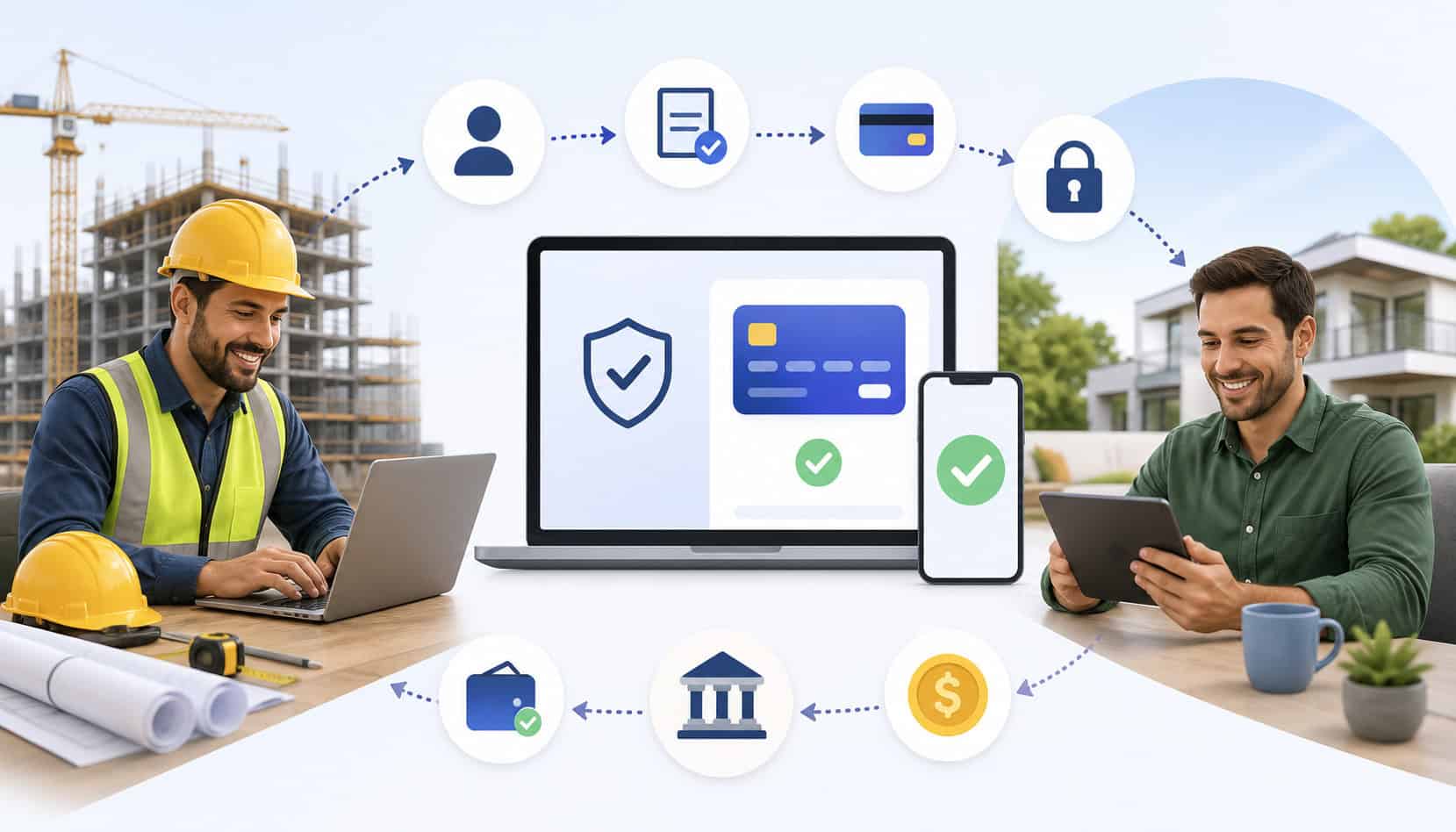
A contractor payment gateway works by securely moving payment information from the client to the systems that approve and process the transaction. The process may feel instant to the client, but several steps happen behind the scenes.
Each step helps confirm the payment details, check for risk, authorize the transaction, and create a record for the contractor.
The process usually begins when the contractor sends an invoice, payment link, estimate approval request, or billing portal notification.
The client opens the payment page and chooses a payment method, such as a credit card, debit card, ACH payment, or supported digital wallet. The gateway encrypts or tokenizes the sensitive payment data so the contractor does not have to manually store it.
From there, the transaction is routed for authorization. If the payment is approved, the system updates the invoice status, generates a receipt, and begins the settlement process. Funds are later deposited into the contractor’s business account based on the processor’s settlement schedule and the payment method used.
| Step | What Happens | Why It Matters |
| Invoice or payment link sent | Contractor sends a bill, deposit request, or payment link to the client | Gives the client a clear, direct way to pay |
| Client enters payment details | Client pays by card, ACH, or another supported digital method | Reduces check delays and supports remote payments |
| Gateway secures the data | Payment details are encrypted or tokenized | Helps protect sensitive client payment information |
| Authorization request | Payment details are sent for approval | Confirms whether the payment can be accepted |
| Fraud and risk checks | The system may review address, card, velocity, or transaction risk signals | Helps reduce fraud and disputes |
| Approval or decline | The client and contractor receive a transaction response | Keeps both parties informed |
| Settlement begins | Approved funds move through processing channels | Starts the path toward deposit |
| Receipt and records created | Invoice status, receipt, timestamp, and transaction details are stored | Supports bookkeeping, reconciliation, and dispute prevention |
A gateway is valuable because it connects payment collection to documentation. Instead of wondering whether a client mailed a check, the contractor can see whether an invoice was sent, viewed, paid, failed, refunded, or overdue.
Payment Authorization
Payment authorization is the step where the gateway securely sends the client’s payment details for approval. When a client pays an online invoice or payment link, the gateway captures the information and sends it through the correct payment network.
For card payments, this usually means the card details are checked with the issuing bank. For ACH payments, the system verifies bank payment instructions according to the provider’s process.
Authorization helps determine whether the payment can move forward. A transaction may be approved, declined, flagged for review, or fail due to incorrect information. Common decline reasons include insufficient funds, expired cards, incorrect billing details, fraud controls, or bank restrictions.
For contractors, authorization is important because it gives a fast signal before work continues. If a deposit payment is declined, the contractor can contact the client before ordering materials or scheduling labor. If a change order payment fails, the project manager can pause that added scope until payment is resolved.
A secure payment gateway also reduces the need for staff to handle sensitive card details manually. Instead of writing down card numbers, the contractor can send a secure payment page and let the system manage authorization.
Settlement and Deposits
Settlement is the process that moves approved funds toward the contractor’s business account. Authorization confirms that the payment can be accepted, but settlement is what eventually results in the deposit. Timing can vary based on the payment method, processor policies, risk review, weekends, holidays, batch timing, and account setup.
Card payments often settle faster than some bank-based payments, although exact timing depends on the provider. ACH payments may take longer because bank transfers can involve additional clearing and return windows.
For larger construction invoices, many contractors still prefer ACH because it can be cost-effective compared with some card transactions.
Contractors should understand settlement timing before relying on funds for materials, payroll, subcontractor payments, or equipment rentals. A payment may show as approved before the money is available in the business account. That difference matters when managing cash flow across multiple projects.
A good contractor payment processing setup should make deposits easy to reconcile. The contractor should be able to match a bank deposit to the original invoice, project, client, transaction ID, and payment method without digging through scattered records.
Receipts and Payment Records
Receipts and payment records are one of the biggest advantages of digital payments for contractors. When a client pays through a gateway, the system can automatically generate a receipt with the payment amount, date, invoice number, method, and confirmation details. This creates a cleaner record than informal texts, handwritten notes, or verbal confirmations.
Digital records help contractors answer common questions quickly. Was the deposit paid? Did the client pay the change order? Which card was charged? Was the final invoice settled? Was a refund issued? A well-organized gateway or contractor billing system can keep those answers tied to the project file.
Payment records also help reduce disputes. If a client later questions a charge, the contractor can review the signed agreement, invoice, payment timestamp, authorization record, receipt, and related communication. Strong documentation does not eliminate all disputes, but it gives the contractor a better foundation for responding.
Receipts also improve client confidence. Clients appreciate confirmation that their payment was received and applied correctly. That is especially important for larger projects where deposits, milestones, and change orders may happen over several weeks or months.
Why Contractors Use Online Payment Gateways
Contractors use online payment gateways because they make payment collection faster, more flexible, and easier to track. Construction and trade businesses often work across job sites, client homes, offices, supply houses, and remote locations.
A gateway gives the business a consistent way to request and collect payments without requiring every payment to happen face-to-face.
One major benefit is faster collection. Instead of waiting for a check to be mailed, picked up, deposited, and cleared, contractors can send an online invoice or payment link as soon as payment is due. The client can pay from a phone, laptop, or tablet. This can shorten the gap between billing and collection, which supports healthier cash flow.
Online payments for contractors also reduce administrative friction. Office staff can see which invoices are paid, unpaid, failed, overdue, or refunded. Project managers can confirm whether a deposit or progress payment has cleared before scheduling the next phase. Owners can review reporting to understand receivables and cash movement.
Client experience is another reason contractors use gateways. Many clients expect digital payment options in other parts of their lives. When a contractor offers card payments, ACH payments, online invoices, and payment links, the process feels more convenient and organized.
Construction payment solutions can also support remote approvals. A client who is traveling, managing a rental property, or coordinating a commercial project from another location can still pay without handing over a physical check.
Deposits and Progress Payments
Deposits and progress payments are central to contractor billing. Many projects require money upfront to reserve labor, purchase materials, order custom products, or schedule crews. A payment gateway helps contractors request deposits professionally through secure invoices or payment links.
Progress billing is another common use case. A contractor may invoice after demolition, framing, rough-in, inspection, installation, or completion of a defined milestone. With a contractor online payment gateway, each payment request can be tied to the correct phase, making it easier for clients to understand what they are paying for.
Change orders also benefit from gateway support. When a client requests added work, upgraded materials, or a scope adjustment, the contractor can send a revised invoice or dedicated payment link for approval and payment. This helps prevent unpaid extras from piling up until the end of the job.
Partial payments can also be useful. Some gateways allow contractors to accept a deposit now and the remaining balance later. This can be helpful for large jobs, staged projects, and service agreements where one full payment upfront is not practical.
Client Convenience
Client convenience matters because payment friction can delay collection. If paying requires printing a check, finding postage, calling during office hours, or handing a card to a technician, some clients will put it off. A gateway gives clients easier options.
A client may receive an email invoice and click a “Pay Now” button. Another may receive a text payment link after approving a change order. A property manager may pay from a portal after reviewing multiple invoices. A homeowner may use a mobile device immediately after a walkthrough.
Convenience does not mean contractors should be careless. Payment requests should still be clear, accurate, and tied to signed terms. The invoice should explain the project, amount due, due date, payment options, and any relevant terms.
When clients can pay quickly and securely, contractors spend less time chasing balances. This improves the overall experience for both sides. The contractor looks organized, and the client has a simpler way to keep the project moving.
Payment Gateway vs Payment Processor: What’s the Difference?
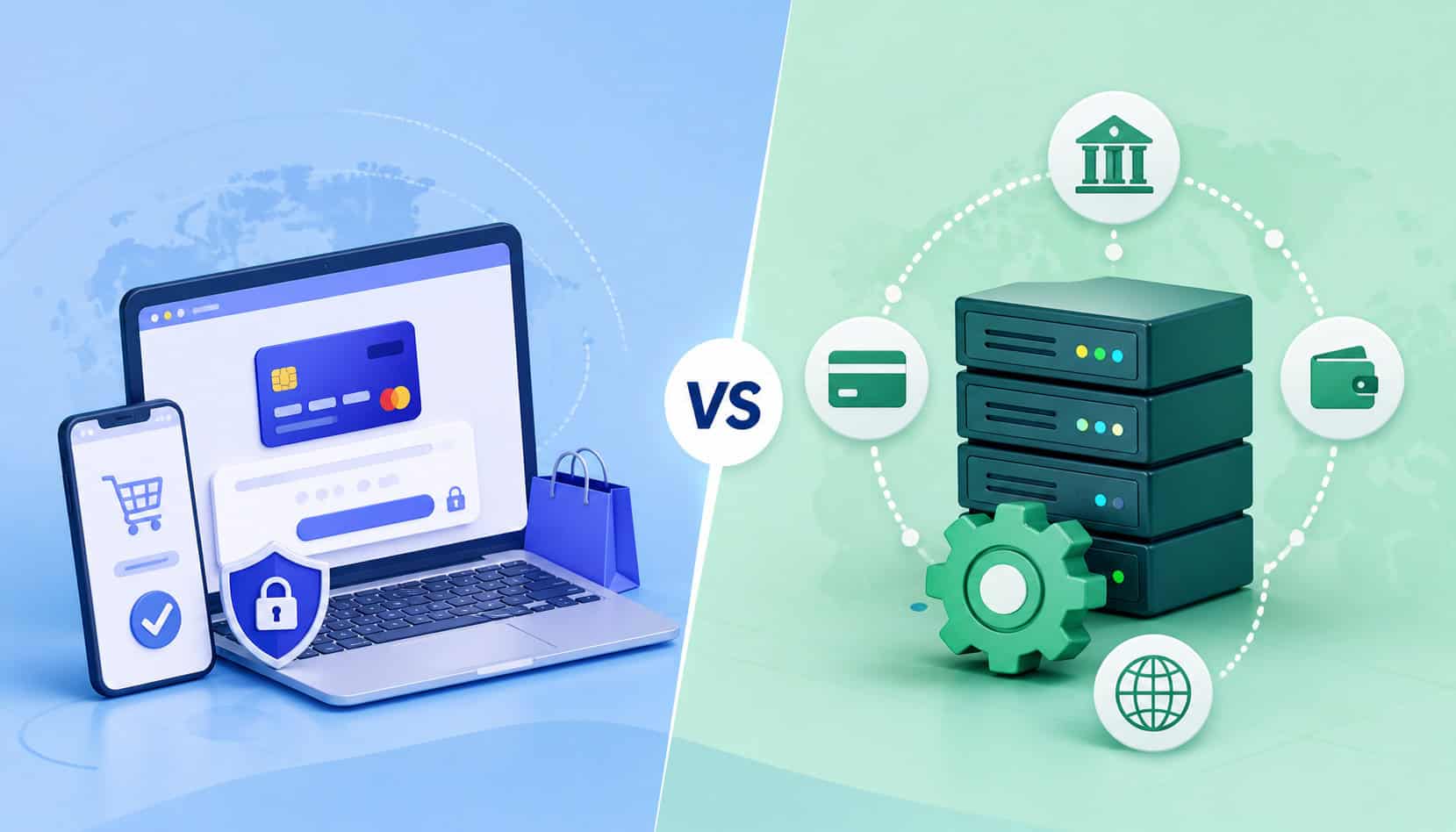
A payment gateway and a payment processor work together, but they are not the same thing. The gateway is the technology that securely captures and transmits payment information. The processor helps move the transaction through the payment networks so funds can eventually reach the contractor’s business account.
Think of the gateway as the secure digital entry point. It is what the client interacts with when paying an invoice, clicking a payment link, entering card details, or submitting ACH information. The gateway protects payment data and sends it for approval.
The processor handles the movement of the transaction behind the scenes. It communicates with card networks, issuing banks, acquiring banks, and other payment systems depending on the payment method. The processor plays a major role in authorization, clearing, settlement, fees, and deposits.
For contractors, the distinction matters because some providers bundle gateway and processing services, while others separate them. A contractor may have one provider for the merchant account and another for the gateway. In other cases, the invoicing platform, payment gateway, and processor are part of one integrated setup.
A contractor should ask:
- Does the system include both gateway and processing?
- Can it support card payments and ACH payments?
- Are online invoices and payment links included?
- How are deposits reported?
- What fees apply to the gateway, processor, and payment methods?
- Who provides support if a payment fails?
- Can the system integrate with accounting or project software?
Choosing a gateway without understanding processing can create surprises. For example, a gateway may look affordable, but processing fees, chargeback fees, settlement timing, or reporting limitations may create problems later.
Payment Methods Contractors Can Accept Through a Gateway
A payment gateway for construction business needs should support the payment methods contractors actually use. Different clients prefer different options, and different invoice sizes may call for different methods.
A small repair invoice may be easy to pay by card. A large remodel deposit may be better suited for ACH. A recurring maintenance agreement may benefit from stored payment authorization or scheduled billing.
Credit cards are popular because they are convenient for clients and can support quick payment decisions. Debit cards may also be used for everyday transactions. Card payments can be especially useful for service calls, deposits, emergency repairs, and final balances where speed matters.
ACH payments are valuable for larger invoices because they move funds directly between bank accounts. Many contractors consider ACH for construction invoices, commercial work, large deposits, and progress payments. More information on this payment method is available in this guide to accepting ACH payments for construction businesses.
Payment links are useful when a contractor needs to request payment quickly without creating a full portal experience. A link can be sent by email, text, or message after an estimate approval, completed service, or change order.
Online invoices are useful for more formal billing. They can include invoice numbers, line items, due dates, descriptions, taxes, discounts, deposits, and payment buttons. Online invoices also help clients understand exactly what they are paying.
Mobile wallets may be supported depending on the gateway and device. These options can be convenient for clients who prefer digital wallet checkout.
Partial payments and scheduled payments may also be useful for project-based billing. Contractors should confirm that the gateway can handle deposits, milestone payments, and final balances without creating messy records.
Security Features to Look For
Security should be a top priority when evaluating payment gateways for contractors. Construction businesses often process large invoices, deposits, and card-not-present transactions.
A secure payment gateway helps protect client data, reduce fraud exposure, and create safer workflows for office teams and field staff.
Encryption is one key feature. It protects sensitive payment data as it moves through the transaction process. Tokenization is another important feature. It replaces sensitive card details with a token so the contractor does not need to store actual card numbers.
Fraud filters can help identify suspicious transactions. Depending on the gateway, these may include address checks, card verification checks, transaction limits, velocity controls, duplicate payment detection, and manual review rules.
User permissions are also important. Not every employee needs access to refunds, customer payment data, reports, or settings. A strong system lets owners control what office staff, estimators, project managers, and technicians can do.
Refund controls help prevent mistakes and misuse. Contractors should be able to document refunds, limit refund permissions, and track who issued a refund and why.
Chargeback documentation is another valuable feature. A gateway or payment system should make it easy to find receipts, authorization logs, invoice details, payment timestamps, and customer records.
Contractors should also look for PCI-aware workflows. That means the system helps reduce direct handling of sensitive card data. Instead of collecting card numbers manually, the contractor sends a secure payment page.
Protecting Client Payment Data
Protecting client payment data is not just a technical concern. It is part of running a trustworthy contracting business. Clients are sharing sensitive financial information, and they expect it to be handled carefully.
Contractors should avoid storing card details manually. Writing card numbers on paper, saving them in notes, keeping them in spreadsheets, or asking clients to send them through unsecured messages creates unnecessary risk. It can also make the business harder to manage safely as it grows.
A secure payment gateway reduces that risk by letting the client enter payment details directly into a protected payment page. The contractor can receive payment confirmation without seeing or storing the full card number.
For repeat clients, some gateways offer tokenized stored payment methods. This can support future billing without exposing the full payment details to staff. Contractors should still obtain proper authorization and clearly explain how future charges will be handled.
Protecting payment data also means limiting employee access. Only authorized team members should manage refunds, payment settings, stored methods, and transaction exports.
Reducing Fraud and Chargebacks
Fraud and chargebacks can be costly for contractors, especially when invoices are large or work has already been completed. While no payment system can prevent every dispute, the right gateway can help reduce risk and improve documentation.
Address verification, card security checks, transaction logs, and authorization records can help identify suspicious payments. For card-not-present transactions, contractors should pay close attention to mismatched billing details, unusual urgency, overpayment requests, or clients who resist signed agreements.
Clear documentation is one of the strongest defenses against disputes. Contractors should keep signed contracts, approved estimates, change order approvals, invoice copies, payment receipts, delivery confirmations, project photos, and client communications.
Payment terms should be easy to understand. Clients should know when deposits are due, when progress payments are required, whether payments are refundable, and what happens if a payment fails.
A contractor billing system that connects invoices, payment records, and project details can make chargeback response easier. Instead of searching across emails and paper files, the contractor can gather records from one organized system.
Costs and Fees Contractors Should Understand
Contractors should understand payment gateway costs before choosing a provider. Fees can vary based on the payment method, provider, transaction size, risk profile, equipment, software, and service package. The lowest advertised rate may not reflect the full cost.
Gateway fees may be charged monthly, per transaction, or as part of a software plan. These fees cover access to the technology that accepts online payments, supports payment links, stores transaction records, and connects to processing systems.
Processing fees apply when card payments, ACH payments, or other digital payments are processed. Card payments may include percentage-based fees, flat per-transaction fees, or different pricing depending on card type and transaction method. ACH payments may have flat fees, percentage fees, caps, return fees, or monthly minimums depending on the provider.
Chargeback fees may apply when a client disputes a payment. Even if the contractor wins the dispute, the process can take time and create administrative burden. Refunds may also have rules about whether original fees are returned.
Monthly fees can include account fees, software fees, statement fees, PCI-related fees, support fees, or gateway access fees. Setup fees may apply with some providers. Early termination fees may also exist, so contractors should review contract terms carefully.
Settlement timing can affect cash flow even when fees are reasonable. A contractor should know when approved funds are expected to reach the business account. This matters for material orders, payroll, subcontractor payments, and equipment costs.
Contractors should compare total cost, not just headline rates. A slightly higher fee may be acceptable if the system reduces admin work, supports ACH, improves reporting, integrates with accounting, and helps collect payments faster.
How to Choose the Right Payment Gateway for a Construction Business
Choosing the right payment gateway for a construction business starts with understanding your billing workflow. A general payment tool may work for simple invoices, but contractors often need more flexibility. Deposits, progress billing, change orders, retainers, partial payments, and final balances should all be considered.
Start by identifying the types of projects you handle. A small service contractor may need mobile payments, quick invoices, and text payment links. A remodeler may need deposits, milestone invoices, and change order billing. A commercial subcontractor may need ACH payments, detailed reporting, and accounting integration.
Next, review payment methods. The gateway should support the methods your clients are likely to use. Card payments are convenient, ACH payments can be useful for larger invoices, and payment links can speed up collection.
Reporting is also important. Contractors should be able to see paid invoices, unpaid invoices, failed payments, refunds, deposits, fees, and transaction history. Good reporting makes reconciliation easier and helps owners understand cash flow.
Integrations can save time. A gateway that connects with accounting, invoicing, estimating, CRM, or project management software can reduce duplicate entry and mistakes. More on this topic is covered in this article about payment integration for contractors.
Support matters as well. If a client cannot pay, a deposit is delayed, or a transaction is flagged, contractors need practical help. Choose a provider that can explain issues clearly and resolve them efficiently.
Match the Gateway to Your Billing Process
A gateway should fit the way your contracting business actually bills. If your projects require deposits, the system should make deposit requests easy. If you use progress billing, the gateway should support multiple invoices for the same project. If you frequently handle change orders, payment links or quick invoice updates can be valuable.
Contractors should avoid forcing their workflow into a system that was not built for project-based billing. For example, if a gateway only works well for one-time retail checkout, it may not be ideal for staged construction payments. The system should make it easy to track what has been billed, what has been paid, and what remains due.
Partial payments can also be important. Some clients may pay a deposit by card and the balance by ACH. Others may split invoices across phases. The gateway should support these situations without creating confusing records.
The goal is to reduce manual follow-up. A well-matched contractor billing system helps the team send invoices, collect payments, apply funds correctly, and keep project records organized.
Review Integrations and Reporting
Integrations and reporting can make a major difference in daily operations. Contractors often use accounting software, estimating tools, CRM systems, project management platforms, or invoice software. If payment data does not connect with those systems, staff may spend extra time entering the same information in multiple places.
Good integrations help reduce errors. When invoices, payments, client names, project details, and deposits sync correctly, the contractor has better visibility. This can make month-end reconciliation easier and reduce confusion between office staff and project managers.
Reporting should be easy to understand. Contractors should be able to filter payments by client, project, date, invoice, payment method, status, and deposit batch. Refunds and chargebacks should also be visible.
A gateway with weak reporting may create problems later. Payments might be accepted successfully, but if the contractor cannot easily match deposits to invoices, bookkeeping becomes more difficult.
Strong reporting supports better decisions. Owners can see which clients pay late, which payment methods are most common, how much is outstanding, and whether certain projects create more payment delays.
Common Mistakes to Avoid
One common mistake is choosing a contractor payment gateway based only on low fees. Fees matter, but they are only one part of the decision. A low-cost system that creates manual work, lacks ACH, has poor reporting, or cannot support deposits may cost more in time and frustration.
Another mistake is ignoring ACH payments. Card payments are convenient, but ACH can be useful for larger project invoices. Contractors who only accept cards may miss an opportunity to offer a bank-based option for clients who prefer it.
Unclear payment terms are another problem. Clients should know when payments are due, what payment methods are accepted, whether deposits are refundable, how change orders are billed, and what happens if a payment fails. A gateway helps collect money, but clear terms help prevent confusion.
Weak refund policies can also cause disputes. Contractors should define when refunds are allowed, how material orders are handled, and whether cancellation fees apply.
Collecting card details insecurely is a serious mistake. Avoid handwritten card forms, unsecured emails, and texted card numbers. Use secure payment pages, online invoices, or payment links.
Not testing payment links is another avoidable issue. A broken link, unclear invoice, or confusing checkout page can delay payment. Contractors should test the client experience before relying on it.
Failing to reconcile deposits can create accounting problems. A payment may be approved, but the contractor still needs to match deposits to invoices and bank activity. Regular reconciliation helps catch missing payments, duplicate entries, refunds, and fees.
FAQs
What are payment gateways for contractors?
Payment gateways for contractors are secure systems that allow construction and trade businesses to accept digital payments through online invoices, payment links, websites, mobile devices, or client portals.
How does a contractor payment gateway work?
A contractor payment gateway securely captures a client’s payment details, sends them for authorization, performs security checks, and returns an approval or decline response.
Do contractors need a payment gateway?
Many contractors benefit from a payment gateway because it makes it easier to accept online payments, collect deposits, send payment links, manage invoices, and reduce check delays.
What payment methods can a gateway accept?
A payment gateway can often accept credit cards, debit cards, ACH payments, mobile wallets, payment links, online invoices, recurring payments, and partial payments.
Are payment gateways secure for construction businesses?
Yes. Secure payment gateways use features such as encryption, tokenization, fraud filters, PCI-aware workflows, user permissions, and protected payment pages.
What fees should contractors expect?
Contractors may encounter gateway fees, card processing fees, ACH fees, monthly fees, setup fees, refund costs, chargeback fees, and software-related fees.
Can gateways support deposits and progress payments?
Yes. Many gateways support deposits, progress payments, partial payments, change order payments, and final invoice balances.
How do contractors choose the right payment gateway?
Contractors should choose a payment gateway based on billing workflow, payment methods, security features, reporting, integrations, fees, settlement timing, support, and ease of use.
Conclusion
Payment gateways for contractors help construction and trade businesses accept secure online payments, collect deposits, manage progress billing, process change orders, improve cash flow, and keep better payment records. They make it easier for clients to pay by card, ACH, payment links, online invoices, and other digital payment methods.
The right gateway should do more than process a transaction. It should support the contractor’s real billing workflow, protect client payment data, simplify reconciliation, and create records that help prevent confusion and disputes.
Contractors should look for a secure payment gateway with strong reporting, clear fees, useful integrations, flexible payment options, and practical support. When the system fits the business, payment collection becomes faster, cleaner, and easier to manage.