
Payment collection is one of the most persistent challenges contractors face. A project may run smoothly in the field, but delayed deposits, slow progress payments, unsigned change orders, and unpaid final invoices can quickly create pressure on contractor cash flow.
Checks can get lost, clients may forget to mail payments, and project managers often spend valuable time following up instead of managing jobs. Online payment systems for contractors help simplify that process by giving clients easier ways to pay and giving contractors clearer control over billing, tracking, and documentation.
What Are Online Payment Systems for Contractors?
Online payment systems for contractors are digital tools that allow construction businesses, remodelers, subcontractors, builders, and tradespeople to accept payments electronically. Instead of relying only on checks, cash, or in-person card collection, contractors can send an invoice, payment link, or portal request that lets the client pay online.
These systems may support:
- ACH payments
- Credit card payments
- Debit card payments
- Mobile payments
- Payment links for contractors
- Online invoicing for contractors
- Client portals
- Recurring or scheduled payments
- Partial payments
- Deposit and progress billing workflows
For example, a remodeler can send a deposit invoice before ordering materials. A roofing contractor can collect a milestone payment after installation begins. A subcontractor can request payment for an approved change order before continuing added work.
The main purpose is to make payment collection faster, easier to track, and more convenient for everyone involved. Good contractor online payment solutions also help reduce manual entry, improve recordkeeping, and support payment security.
Why Contractors Are Moving Toward Digital Payments

Contractors are adopting digital payments because billing expectations have changed. Many clients are now used to paying invoices, deposits, subscriptions, and service providers online. When a contractor only accepts checks, the payment process may feel slower and less convenient.
Digital payments for construction businesses also help with remote approvals. Not every client is available to meet in person, sign paperwork, or hand over a check. With online invoices and payment links, contractors can request payment by email or text and receive confirmation once the transaction is completed.
This is especially useful when projects involve multiple decision-makers. A homeowner, property manager, builder, or business owner may need to approve a change order from another location. A digital invoice creates a clearer record of what was billed, when it was sent, and whether it was paid.
Online payment processing for contractors also shortens billing cycles. Instead of waiting for checks to arrive, depositing them manually, and reconciling them later, contractors can track payment status from a dashboard or connected accounting system.
For more detail on billing tools, this guide to online invoicing tools for contractors is a helpful related resource.
Key Benefits of Online Payments for Contractors
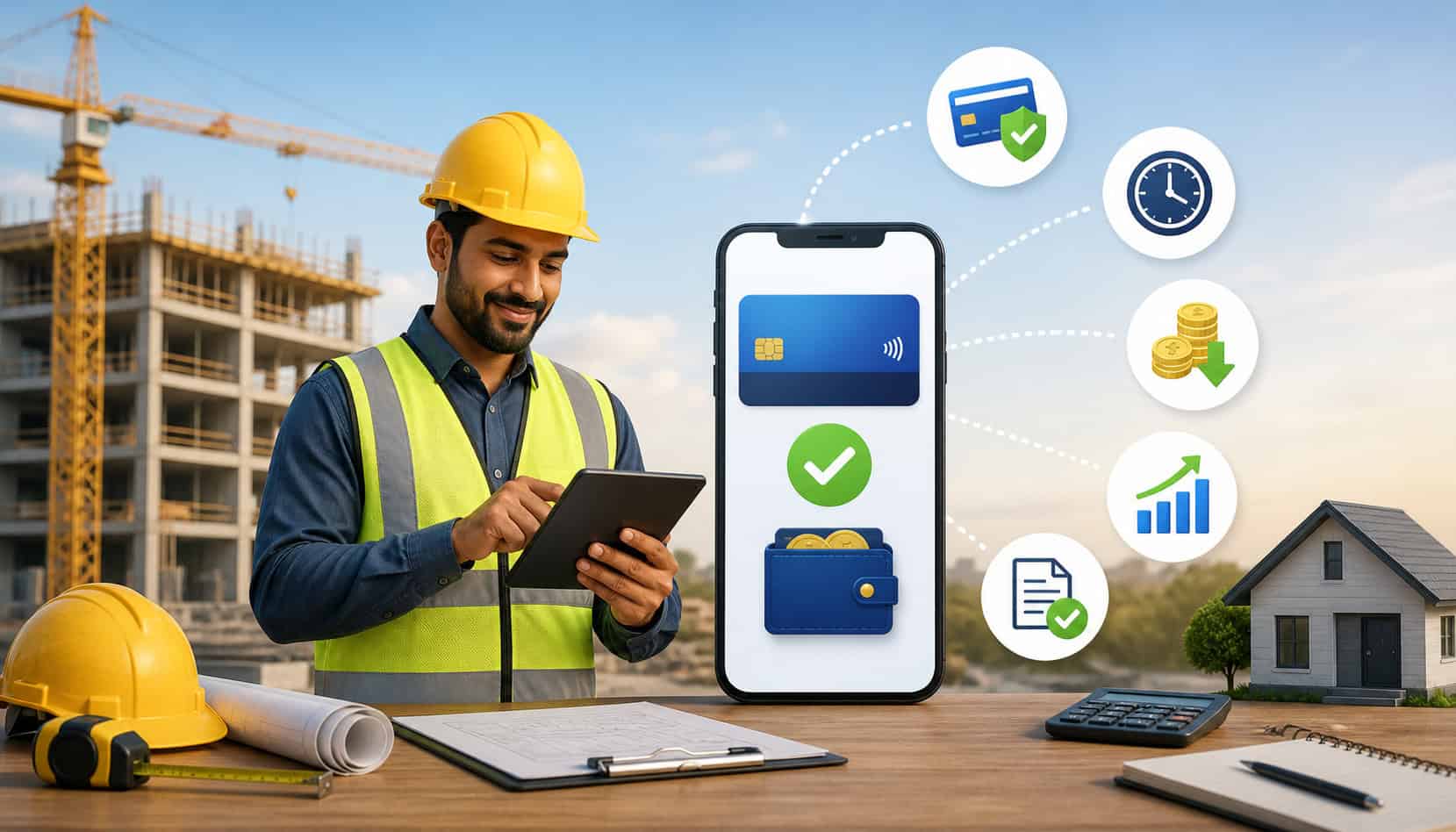
The benefits of online payments for contractors go beyond speed. A well-chosen system can improve cash flow, reduce administrative work, create better documentation, and make the business appear more organized and professional.
| Benefit | How It Helps Contractors | Why It Matters |
| Faster payment collection | Clients can pay through invoices, links, or portals | Reduces delays from mailed checks and manual follow-ups |
| Better cash flow | Deposits, milestones, and final payments are easier to track | Helps cover labor, materials, equipment, and subcontractor costs |
| Easier invoicing | Digital invoices can include payment buttons and due dates | Reduces confusion and improves payment timing |
| Fewer manual follow-ups | Automated reminders can notify clients before or after due dates | Saves office and project management time |
| Better records | Receipts, timestamps, and payment histories are stored digitally | Supports bookkeeping, disputes, and project documentation |
| Client convenience | Clients can pay by ACH, card, mobile wallet, or portal | Creates a smoother customer experience |
| Stronger professionalism | Clear digital billing shows organization and reliability | Builds trust during larger or longer projects |
Faster Payment Collection
Faster collection is one of the clearest advantages of online payment systems for contractors. When clients receive an invoice with a payment button, they can pay immediately instead of finding a checkbook, mailing payment, or coordinating an in-person visit.
Payment links for contractors are especially useful for deposits, service calls, emergency work, and small balances. A contractor can send a link after an estimate is approved, and the client can pay from a phone or computer.
Saved payment options may also reduce repeat delays. For ongoing work, service agreements, or phased projects, clients may authorize a preferred method for future payments. That can make recurring billing or scheduled milestone payments easier to manage.
Better Cash Flow Management
Contractor cash flow depends on timing. Materials, payroll, equipment rentals, permits, and subcontractor costs often come due before the contractor receives final payment. Online payment processing for contractors helps reduce the gap between billing and collection.
Digital systems can support deposits, milestone invoices, change orders, and final balances. This gives contractors better visibility into what has been paid, what is pending, and what needs follow-up.
Clear tracking also helps project managers avoid starting the next phase before the previous payment is collected. For larger jobs, that discipline can protect profit margins and reduce financial stress.
ACH payments can be especially useful for larger invoices because they may offer a practical alternative to checks. For more detail, see this resource on ACH payments for construction businesses.
More Convenient Client Experience
A smoother payment experience can improve the overall customer relationship. Clients may appreciate the ability to pay from a phone, email, invoice link, or online portal without mailing checks or meeting in person.
This convenience matters during busy projects. A client may be approving materials, reviewing timelines, and coordinating access to the property. Making payment simple reduces friction.
Offering multiple payment options also helps match different preferences. Some clients may prefer ACH payments for larger balances, while others may prefer card payments for convenience or rewards. Mobile payments can work well for field service, repairs, or smaller jobs.
Online Payment Systems and Progress Billing
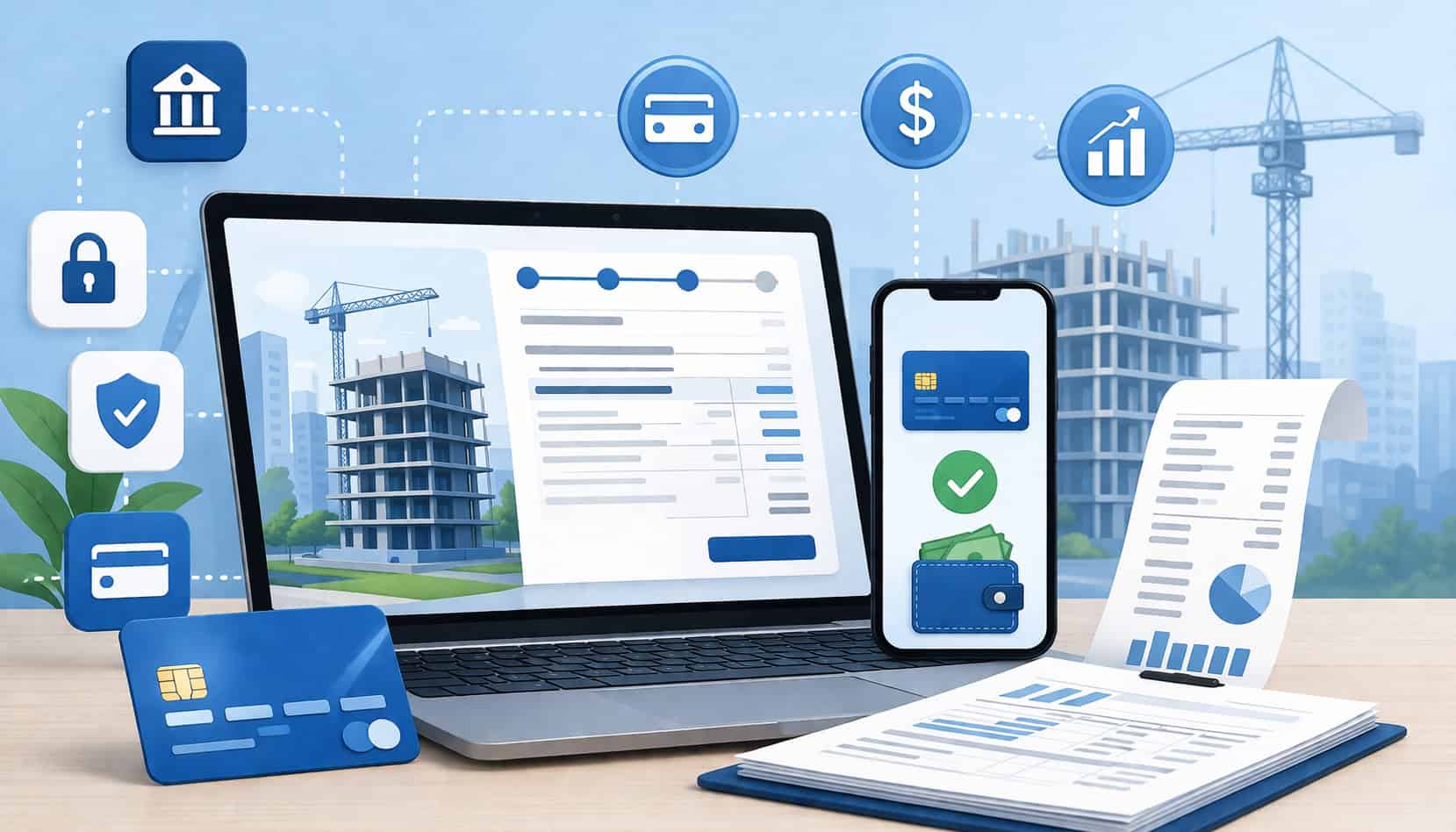
Progress billing is common in construction because projects often happen in phases. A contractor may collect an upfront deposit, bill after demolition, invoice again after rough-in work, request payment after inspections, and collect the final balance after completion.
Online payment systems for contractors make this easier by connecting each phase to a clear invoice and payment record. Instead of relying on scattered emails, paper invoices, and check deposits, the contractor can track each billing event digitally.
This is useful for:
- Deposits
- Phase-based billing
- Milestone invoices
- Retainage
- Change orders
- Final payments
- Partial payments
Digital construction payment solutions also help reduce disputes. When each invoice includes the project phase, amount due, due date, and payment status, both contractor and client have a clearer record.
Deposits and Upfront Payments
Deposits help contractors schedule jobs, reserve labor, order materials, and reduce financial risk. Collecting deposits digitally can make the process faster and more reliable.
Instead of waiting for a check before ordering materials, a contractor can send a deposit invoice with an online payment option. Once payment is confirmed, the project can move forward with less delay.
This is especially important when material prices, supplier timelines, or subcontractor availability affect scheduling. A slow deposit can delay the entire project.
Change Order Payments
Change orders are a major source of payment problems. Additional work may be requested during a project, but if approval and payment are not handled clearly, the contractor may end up funding added labor and materials out of pocket.
Online payment tools can help by tying each change order to a digital approval and payment request. The client sees the added scope, cost, and payment requirement before work continues.
This creates better accountability. It also helps contractors avoid stacking unpaid change orders until the end of the job, where they may become harder to collect.
Payment Methods Contractors Can Offer Online
Contractor payment systems can include several payment methods. The right mix depends on project size, invoice amount, client preferences, and processing costs.
ACH payments are commonly used for bank-to-bank transfers. They can be useful for larger invoices, deposits, and recurring payments. Contractors should review processing time, return rules, and transaction limits before relying on ACH for time-sensitive payments.
Card payments include credit cards and debit cards. These are convenient for clients and can support faster collection, especially for smaller invoices, service work, and deposits. Contractors should understand card processing fees and decide whether to build payment costs into pricing or offer different payment options.
Mobile payments can help field teams collect payment on-site. This can be useful for service contractors, repair technicians, and tradespeople who complete smaller jobs in one visit.
Payment links are simple and flexible. A contractor can send a link by email or text after an estimate, invoice, or change order is approved.
Client portals are useful for larger or longer projects. They may allow clients to view invoices, payment history, documents, and outstanding balances in one place.
Recurring or scheduled payments may work for maintenance contracts, service agreements, or phased billing plans. Contractors should always get clear authorization before scheduling future payments.
How Online Payment Systems Improve Recordkeeping
Strong recordkeeping is essential for contractors. Projects involve estimates, contracts, deposits, progress payments, change orders, receipts, lien-related documentation, subcontractor costs, and final invoices. When payment information is scattered across checks, texts, emails, and spreadsheets, it becomes harder to manage.
Online payment systems improve recordkeeping by creating digital payment records. These may include invoice histories, receipts, timestamps, payment statuses, settlement details, refund records, and customer notes.
This helps with bookkeeping because payments can often be matched to invoices more easily. It also supports tax preparation, financial reporting, and job costing.
Digital records can also help during disputes. If a client questions whether a payment was made, when an invoice was sent, or what amount was due, the contractor can refer to documented records instead of relying on memory.
For contractors comparing billing tools, this guide to construction invoice software provides additional context.
Payment Security and Fraud Prevention
Payment security matters for every contractor that accepts electronic payments. Clients trust contractors with sensitive financial information, and mishandling that information can create legal, financial, and reputational risk.
Secure online payment systems may use encryption, tokenization, hosted payment pages, access controls, and PCI-aware workflows. These features help reduce exposure to sensitive card data.
Contractors should avoid collecting card details by email, text, handwritten notes, or unsecured forms. Those methods can create unnecessary risk and make it harder to maintain safe payment practices.
Refund permissions should also be controlled. Not every employee needs access to issue refunds, view payment details, or change billing settings. Role-based access can help prevent mistakes and internal misuse.
Protecting Client Payment Information
Contractors should rely on secure payment processors instead of manually storing sensitive payment details. A secure processor can help manage card data through protected systems, reducing the need for the contractor to handle that information directly.
This is important for field teams as well. A technician or project manager should not be texting card numbers back to the office or writing payment details on paper forms that can be lost.
Client trust depends on professionalism. When a contractor sends a secure payment link or hosted invoice, the client sees a more reliable process.
Costs and Fees to Consider
Online payment systems have costs, and contractors should review them carefully. The goal is not always to find the cheapest option. The better question is whether the system saves time, speeds up collection, reduces errors, and supports the way the business bills.
Common costs may include:
- Card processing fees
- ACH fees
- Chargeback fees
- Monthly software fees
- Gateway fees
- Hardware costs
- Refund costs
- Same-day or faster-funding fees
- Integration fees
- PCI-related fees
- Account maintenance fees
Card payments often cost more than ACH payments, but they may be more convenient for some clients. ACH payments may be cost-effective for larger invoices, but settlement time and return risk should be considered.
Chargebacks are another important factor. Contractors should keep signed contracts, approved change orders, delivery records, job photos, messages, and payment authorizations. Good documentation can help respond to disputes.
Settlement timing also matters. A payment may be approved before funds are available in the bank account. Contractors should understand when money will actually settle.
How to Choose Contractor Online Payment Solutions
Choosing contractor online payment solutions should start with your billing workflow. A small handyman business, remodeling company, electrical subcontractor, and commercial builder may all need different payment features.
Look at project size, payment volume, invoice frequency, accepted payment methods, and whether you need mobile access. Also consider whether the system supports deposits, progress billing, change orders, partial payments, and final invoices.
Security should be a non-negotiable requirement. Contractors should look for secure hosted payment pages, user permissions, payment tokenization, and reliable reporting.
Customer support also matters. When payment issues happen, contractors need help quickly. A delayed payment or unresolved processing issue can affect payroll, materials, and project scheduling.
For a broader selection checklist, this guide on choosing a payment processor for construction businesses may be useful.
Match the System to Your Billing Workflow
A contractor should not choose a payment system only because it is popular. The system must match how the business actually gets paid.
If your jobs require deposits, choose a tool that makes deposit invoices easy. If you use progress billing, look for partial payments and milestone tracking. If change orders are common, make sure the system can send updated invoices quickly.
Final payments should also be easy to collect. Many contractors lose time after completion because clients delay the last check. A digital final invoice with a payment link can reduce that delay.
Review Integrations and Reporting
Integrations can reduce duplicate entry and improve visibility. A contractor may need payment data to connect with accounting, estimating, CRM, or project management software.
Good reporting helps owners and managers answer practical questions:
- Which invoices are unpaid?
- Which jobs have collected deposits?
- Which clients are overdue?
- How much was paid by ACH versus card?
- What fees were charged?
- Which payments are tied to which projects?
Mobile reporting can also help project managers in the field. If a client says payment was made, staff should be able to confirm status quickly instead of calling the office.
Common Mistakes to Avoid With Online Payments
Online payments can improve billing, but only when used correctly. Contractors should avoid treating payment software as a cure for unclear terms or poor internal processes.
One common mistake is failing to define payment terms. Every estimate, contract, and invoice should explain when payment is due, what methods are accepted, and what happens if payment is late.
Another mistake is ignoring processing fees. Contractors should understand their costs and decide how those costs fit into pricing, billing policies, and client communication.
Weak refund policies can also create confusion. Contractors should have clear rules for deposits, cancellations, returned materials, disputed work, and overpayments.
Other mistakes include:
- Not testing payment links before sending them
- Forgetting to reconcile deposits
- Sending invoices without due dates
- Collecting card details insecurely
- Giving too many employees admin access
- Failing to train staff
- Not documenting change order approvals
- Waiting too long to follow up on overdue invoices
FAQs
What are online payment systems for contractors?
Online payment systems for contractors are digital tools that let contractors accept payments through online invoices, payment links, ACH transfers, card payments, mobile payments, and client portals.
What are the biggest benefits of online payments for contractors?
The biggest benefits include faster payment collection, improved contractor cash flow, easier invoicing, fewer manual follow-ups, better records, stronger payment security, and a more convenient client experience.
Can contractors accept deposits online?
Yes. Contractors can use online invoicing, payment links, ACH payments, or card payments to collect deposits before work begins.
Are online payments secure for construction businesses?
Online payments can be secure when handled through a reliable payment processor with encryption, tokenization, hosted payment pages, access controls, and safe workflows.
What payment methods should contractors offer?
Many contractors benefit from offering ACH payments, credit cards, debit cards, mobile payments, payment links, and online invoices.
How do online payment systems improve cash flow?
They make it easier to collect deposits, milestone payments, change orders, and final invoices on time.
What fees should contractors expect?
Contractors may see card processing fees, ACH fees, chargeback fees, monthly software costs, and other related expenses.
When should a contractor switch from checks to online payments?
A contractor should consider switching when checks slow down cash flow, staff spend too much time following up, or clients request digital payment options.
Conclusion
Online payment systems for contractors can make payment collection faster, more organized, and easier for clients. They support deposits, progress payments, change orders, final invoices, ACH payments, card payments, mobile payments, and online invoicing.
The right system can improve contractor cash flow, reduce manual billing work, strengthen recordkeeping, and create a smoother client experience. It can also help contractors look more professional and stay better organized across multiple projects.
The best choice is not simply the most feature-heavy option. Contractors should choose secure, practical contractor payment systems that match their billing workflow, project size, payment volume, and growth goals.