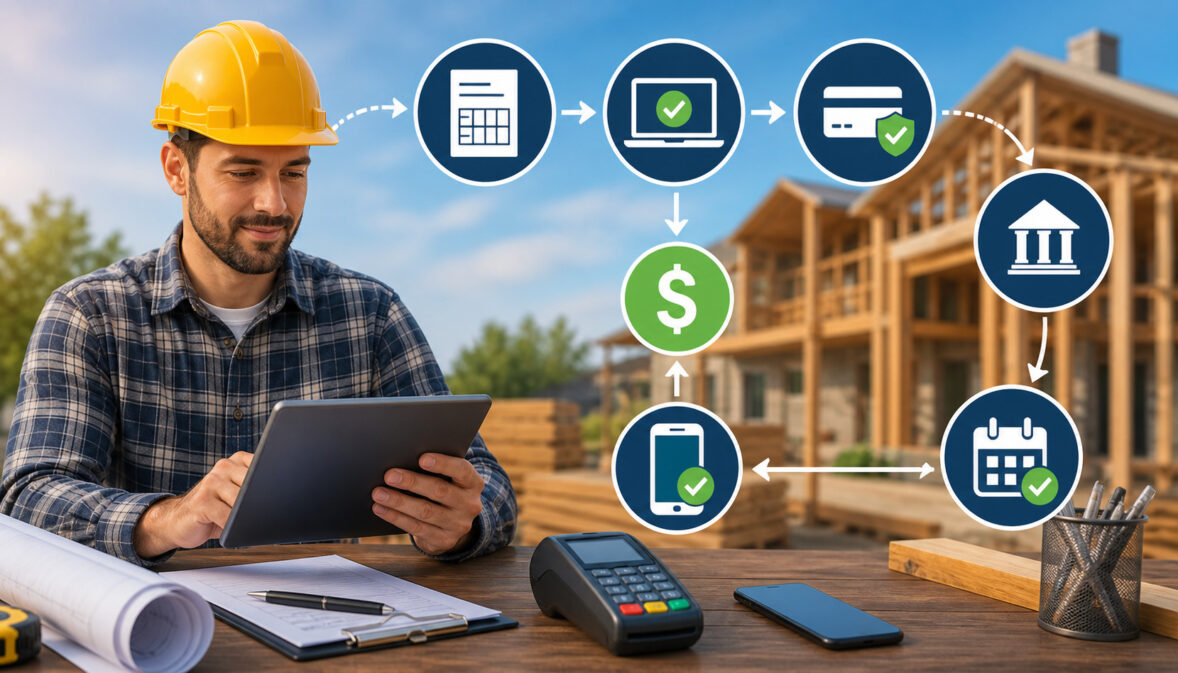
Payment collection is one of the biggest operational challenges in contracting. A project may start with a deposit, move through several progress payments, include change orders along the way, and end with a final invoice that must be collected before the job can be closed out. When payments are slow, unclear, or hard to track, cash flow suffers.
That is why payment processing for contractors is more than simply accepting a card or depositing a check. It is the full system contractors use to request, accept, verify, track, and reconcile payments from clients.
For builders, remodelers, subcontractors, specialty trades, and project managers, the right setup can reduce delays, improve client communication, and make every stage of billing easier to manage.
Modern contractor payment solutions help businesses collect deposits, send invoices, accept online payments, automate reminders, and keep records organized. Instead of chasing checks or manually matching payments to jobs, contractors can use digital tools to connect invoices, payment links, job costs, and reporting in one workflow.
What Is Payment Processing for Contractors?
Payment processing for contractors is the process of accepting and managing payments for construction, remodeling, repair, installation, maintenance, and specialty trade work. It includes the payment method the client uses, the technology that moves the transaction, the system that records the payment, and the business account where funds are deposited.
For contractors, payment processing often has more moving parts than a simple retail sale. A contractor may collect an upfront deposit before materials are ordered, bill progress payments to construction clients at key project milestones, send change order invoices, and collect a final balance after completion.
Each of those payments needs to be documented clearly and matched to the correct customer, job, invoice, and phase of work.
Common contractor payment methods include:
- Cash
- Paper checks
- Credit cards
- Debit cards
- ACH or bank transfers
- Online invoice payments
- Mobile payments
- Recurring or scheduled payments
- Payment links
- Digital wallets, depending on the system
A good contractor payment processing system helps reduce confusion by bringing these methods into one organized workflow. Instead of tracking payments through text messages, handwritten notes, spreadsheets, and bank deposits, contractors can see which invoices are open, which are paid, and which need follow-up.
Contractor payment processing systems are especially helpful when several people are involved in a project. Office staff, estimators, field managers, owners, and bookkeepers may all need access to payment information. A structured system makes it easier for everyone to stay aligned.
How Construction Payment Processing Works Step-by-Step
Construction payment processing usually starts before any money changes hands. The contractor defines the scope of work, payment terms, accepted payment methods, deposit requirements, milestone schedule, and final payment expectations. These details should appear in the estimate, proposal, contract, or invoice so the client knows exactly when and how to pay.
Once the job begins, the contractor creates an invoice or payment request. The client pays using an approved method, such as a card, ACH transfer, check, or online payment link. The payment processor, bank, or payment network verifies the transaction. After approval, funds are settled and deposited into the contractor’s account.
Here is a simplified view of the workflow:
| Step | What Happens | Why It Matters |
| 1. Estimate or contract is approved | Contractor and client agree on pricing, scope, and payment terms | Sets expectations before work begins |
| 2. Invoice is created | Contractor sends a deposit, progress, change order, or final invoice | Creates a documented payment request |
| 3. Client chooses payment method | Client pays by card, ACH, check, cash, or digital option | Gives flexibility and improves convenience |
| 4. Payment is authorized | Processor or bank verifies the transaction | Confirms funds or available credit |
| 5. Payment is processed | Transaction moves through the payment network | Transfers payment information securely |
| 6. Funds are settled | Money is deposited into the contractor’s account | Supports cash flow and job funding |
| 7. Payment is reconciled | Invoice is marked paid and matched to the project | Keeps books, reports, and job records accurate |
The goal is not only to get paid. The goal is to get paid in a way that is predictable, secure, trackable, and easy for both the contractor and the client.
Creating and Sending Invoices
The invoice is the foundation of contractor invoicing and payments. A strong invoice tells the client what they are paying for, when payment is due, how they can pay, and what happens if payment is late. It should be detailed enough to avoid confusion but organized enough that the client can understand it quickly.
A contractor invoice should usually include:
- Contractor business details
- Client name and project address
- Invoice number
- Date issued
- Due date
- Description of work
- Labor, materials, equipment, permits, or subcontractor charges
- Deposit or prior payments applied
- Current amount due
- Accepted payment methods
- Late payment terms, if applicable
- Notes about change orders or retainage
For larger jobs, invoices may be tied to project phases. For example, a remodeler might invoice at contract signing, demolition completion, rough-in completion, installation, and final walkthrough. This makes the payment schedule easier to connect to actual job progress.
Payment Authorization and Processing
Once the invoice is sent, the client chooses a payment method. If the contractor accepts online payments, the invoice may include a secure payment link. The client can click the link, review the amount, and pay by card or bank transfer. For in-person payments, the contractor may use a terminal, mobile card reader, or virtual terminal.
During authorization, the payment processor checks whether the transaction can be approved. For card payments, this usually involves verifying card details, available credit or funds, and fraud checks. For ACH or bank transfers, the system may verify account information and initiate a transfer request.
Authorization does not always mean the money is already in the contractor’s account. It means the payment has been approved to move forward. Settlement and deposit happen afterward.
Digital payments for contractors can speed up this process because clients do not need to mail checks, visit a bank, or coordinate an in-person handoff. They can pay from a computer or phone, and the contractor receives a digital record of the transaction.
For more background on accepting digital payments, contractors may find this guide on online payment systems for construction contracts useful.
Fund Settlement and Deposits
Settlement is the stage where approved funds move from the client’s payment source to the contractor’s business account. Timing depends on the payment method, processor, bank policies, risk review, weekends, holidays, and transaction type.
Card payments are often faster than checks, but they may include processing fees. ACH payments can be cost-effective for larger invoices, but they may take longer to clear. Checks may appear familiar to clients, but they create delays if they are mailed, deposited manually, returned, or misplaced.
Settlement timing matters because contractors often need funds to purchase materials, pay crews, schedule subcontractors, rent equipment, and keep projects moving. A delayed payment can affect the entire job schedule.
A strong construction billing system should show payment status clearly. Contractors should be able to see whether a payment is pending, approved, failed, deposited, refunded, or disputed. This visibility reduces guesswork and helps office teams follow up quickly when something goes wrong.
Common Payment Methods Used by Contractors

Contractors often serve a wide range of clients, from homeowners and property managers to builders, developers, facility operators, and commercial accounts. Because clients have different preferences, offering multiple payment options can make it easier to get paid on time.
The best contractor payment methods depend on job size, client type, transaction amount, risk level, and administrative workload. Smaller service calls may be well suited for card or mobile payments. Larger projects may use deposits, ACH transfers, milestone invoices, or a mix of payment methods.
Offering flexibility can improve the client experience, but it should not create chaos for the contractor. Every method should be documented, secure, and easy to reconcile. If payments arrive through too many disconnected channels, it becomes harder to know which invoices are paid and which still require follow-up.
A well-organized payment setup may include:
- Card acceptance for convenience
- ACH for larger invoices
- Online payment links for remote billing
- Mobile payments for field teams
- Checks only when needed
- Clear rules for cash handling
- Automated receipts and invoice updates
The key is to match payment convenience with financial control. Contractors should avoid accepting payments in ways that cannot be tracked, verified, or tied back to the job.
Cash and Check Payments
Cash and checks are traditional contractor payment methods, and many clients still use them. They can be familiar and straightforward, especially for smaller jobs or long-standing client relationships. However, they also create limitations that contractors should not ignore.
Cash can be difficult to track if receipts are not issued immediately. It also creates security concerns when field staff carry payments or when cash is stored before deposit. Without strong documentation, cash payments can lead to disputes about how much was paid and when.
Checks provide a written record, but they are slower. A check may be mailed late, lost, written incorrectly, returned for insufficient funds, or deposited days after receipt. For contractors managing several jobs at once, check delays can make cash flow unpredictable.
That does not mean contractors must eliminate checks entirely. Instead, they should set clear rules. Every check should be logged, matched to an invoice, deposited quickly, and tracked until cleared.
Credit and Debit Card Payments
Credit and debit card payments are popular because they are convenient for clients and faster for contractors to process. A client can pay a deposit, service invoice, or final balance without writing a check or arranging a bank transfer. For contractors, this can reduce friction and improve collection speed.
Card payments are especially helpful for:
- Emergency service calls
- Residential repairs
- Remodeling deposits
- Change orders
- Final balances
- Smaller commercial invoices
- Mobile field payments
The main consideration is cost. Payment processing fees contractors pay for card transactions usually include a percentage of the transaction amount and sometimes a small fixed fee. These fees can affect margins, especially on large invoices or low-margin jobs.
Contractors should understand their pricing model before accepting cards for every transaction. Some may choose to accept cards for deposits and smaller invoices while encouraging ACH for larger balances. Others may build processing costs into pricing where allowed by their agreements and applicable rules.
The value of card payments is not only speed. Card acceptance can also make the business look more professional and easier to work with.
Bank Transfers and Digital Payments
Bank transfers and digital payments for contractors are useful when clients want a secure, trackable, and convenient way to pay without using paper checks. ACH payments are commonly used for invoice payments, recurring billing, and larger balances because fees may be lower than card transactions.
Online payments for contractors often work through invoice links. The contractor sends an invoice by email or text, and the client pays through a secure page. This creates a clean record for both parties and may automatically update the invoice status.
Mobile payment options can also help field teams collect payment at the jobsite. For example, a technician may complete a repair, send the invoice from a mobile app, and collect payment before leaving the property.
Digital options are strongest when they integrate with accounting, invoicing, or construction management software. Integration reduces duplicate data entry and lowers the risk of mistakes.
For additional context, this article on mobile payment apps for contractors explains how mobile tools can support invoicing, payment tracking, and on-the-go collections.
Understanding Contractor Payment Processing Fees

Payment processing fees contractors pay vary based on payment method, transaction type, processor, risk profile, monthly volume, average ticket size, equipment, software, chargeback history, and pricing structure. Understanding these costs is important because construction invoices can be large, and even a small percentage can affect profitability.
Common fee types include:
- Percentage-based transaction fees
- Flat per-transaction fees
- Monthly service fees
- Payment gateway fees
- ACH fees
- Chargeback fees
- PCI or compliance-related fees
- Equipment or terminal costs
- Batch or statement fees, depending on the provider
For example, a card transaction may include a percentage of the invoice plus a small fixed amount. ACH may have a lower fee but slower settlement. A virtual terminal may be useful for office payments, while a mobile reader may be better for field teams.
Contractors should look beyond the headline rate. A low advertised rate may not include gateway fees, monthly minimums, statement fees, or higher costs for certain card types. The best way to evaluate cost is to compare the total monthly processing expense against total collected volume.
It is also important to consider the cost of not offering convenient payment methods. If a digital payment option helps collect invoices faster, reduces office follow-up, and improves cash flow, the fee may be worth it.
Contractors comparing options may find this overview of payment processing solutions for construction businesses helpful for understanding how different systems support construction billing needs.
Progress Payments and Milestone Billing
Progress payments construction businesses use are payments made at specific stages of a project instead of waiting until the entire job is complete. This structure is common in construction because projects often require materials, labor, equipment, permits, inspections, and subcontractor coordination long before final completion.
A progress payment schedule may be based on time, percentage of completion, project milestones, or completed phases of work. For example, a contractor might collect 30% upfront, 30% after rough-in, 30% after installation, and 10% after final walkthrough. Another contractor may bill monthly based on completed work.
Progress billing helps connect payment to job progress. It also reduces the financial risk of funding the entire project before receiving payment. This is especially important for contractors handling large material purchases or long project timelines.
A good progress payment system should be clearly documented in the contract. The client should know what triggers each invoice, how much is due, when it is due, and how payment can be made. The contractor should also document completed work with photos, inspection notes, signed approvals, or project updates when appropriate.
Progress billing works best when communication is consistent. Clients are more likely to pay on time when they understand what has been completed and why the next payment is due.
Benefits of Progress Payments
Progress payments improve cash flow by spreading revenue across the life of the project. Instead of carrying labor and material costs until the end, contractors receive funds as work advances. This helps keep the project financially stable.
Progress payments also reduce risk. If a client delays or refuses payment, the contractor can address the issue before completing the entire job. This is much safer than discovering a payment problem only after all work is finished.
Other benefits include:
- Better alignment between work completed and money received
- Less reliance on credit or operating reserves
- Easier material purchasing
- Improved subcontractor payment scheduling
- More predictable cash flow
- Clearer client expectations
- Better documentation for disputes
Progress payments can also improve client confidence when structured fairly. Clients see that payments are tied to visible progress rather than arbitrary dates.
Setting Clear Payment Schedules
A clear payment schedule should be established before work begins. It should appear in the contract, estimate, or approved proposal, and it should match how the project will actually be managed. Vague terms often lead to disputes, especially when clients and contractors define “substantial completion” differently.
A payment schedule should include:
- Deposit amount
- Milestone names
- Payment amounts or percentages
- Due dates or trigger events
- Accepted payment methods
- Late payment rules
- Change order billing process
- Retainage terms, if used
- Final payment requirements
Contractors should also explain how changes affect billing. If the client approves extra work, the change order should state whether payment is due immediately, at the next milestone, or with the final invoice.
Digital construction billing systems can help by generating scheduled invoices automatically. This reduces missed billing opportunities and keeps the project team aware of upcoming payment events.
The more specific the schedule, the easier it is to enforce. Clear terms protect both the contractor and the client.
Payment Security and Fraud Prevention
Contractor payment security is essential because payment transactions involve sensitive client data, bank information, card details, invoices, addresses, and project records. A weak payment process can expose the business to fraud, disputes, chargebacks, and reputational damage.
Secure payment processing starts with using trusted systems instead of improvised methods. Contractors should avoid collecting card details through email, text messages, paper notes, or unsecured forms. Payment information should be entered only through secure terminals, hosted payment pages, encrypted gateways, or approved software.
Important security practices include:
- Use secure payment links instead of requesting card numbers manually
- Limit employee access to payment data
- Require strong passwords and multi-factor authentication
- Keep software updated
- Use reputable payment gateways
- Review transactions for unusual activity
- Confirm large payment changes directly with the client
- Train staff on phishing and invoice fraud
- Keep refund and chargeback procedures documented
Invoice fraud is another concern. Fraudsters may attempt to impersonate a contractor and send fake payment instructions to clients. Contractors should tell clients upfront how official invoices will be delivered and what payment methods are accepted.
Chargebacks can also create problems. A client may dispute a card payment if they do not recognize the charge, disagree with the work, or claim the service was not completed. Contractors can reduce this risk with signed contracts, detailed invoices, work approvals, photos, completion forms, and clear communication.
Tools and Systems for Contractor Payment Processing
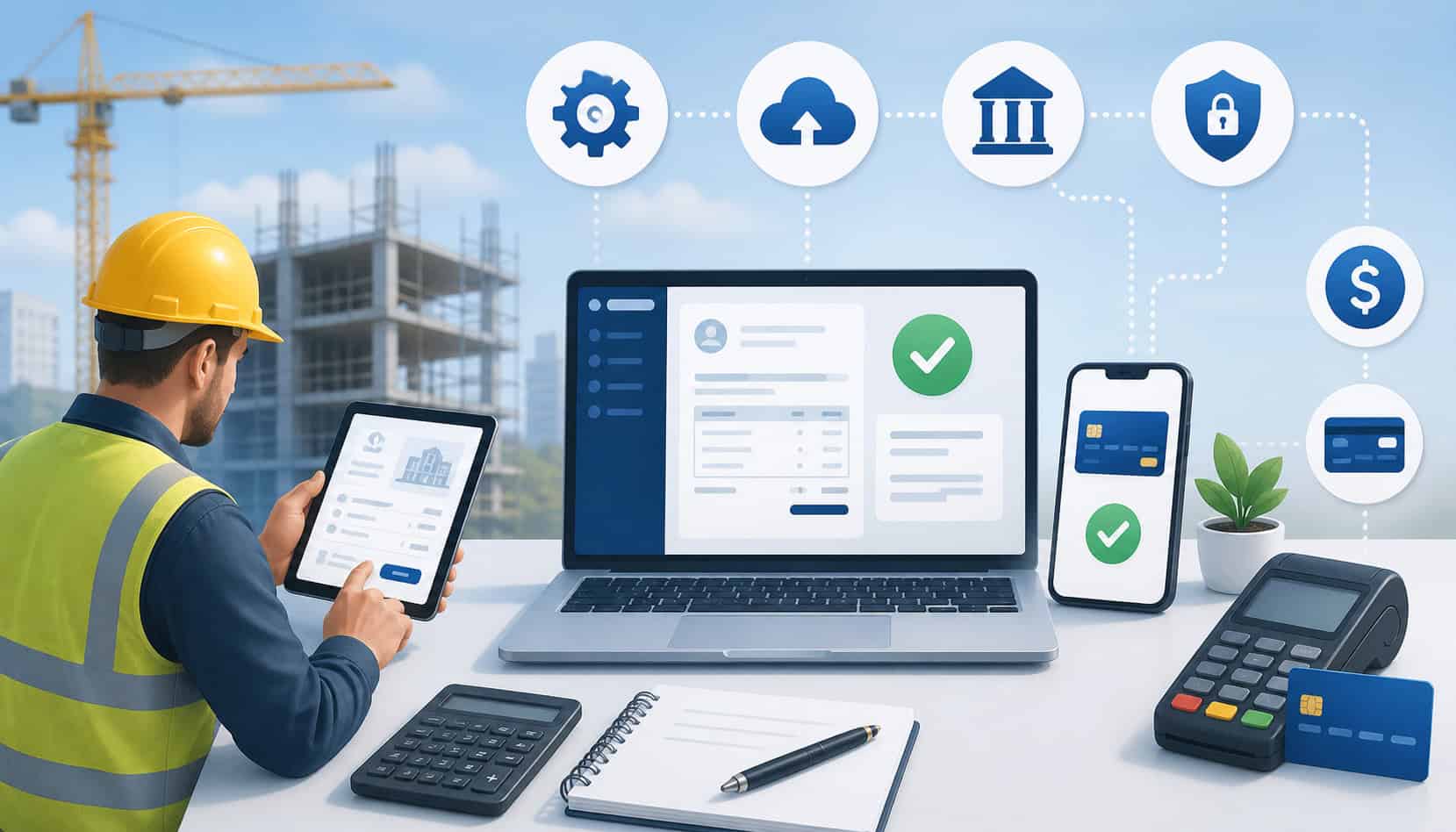
Contractor payment processing systems help businesses manage payments more efficiently by combining invoicing, payment acceptance, reminders, reporting, and reconciliation. Instead of using disconnected tools, contractors can build a workflow where estimates, invoices, payments, and job records stay connected.
Useful tools may include:
- Invoicing software
- Payment gateways
- Virtual terminals
- Mobile card readers
- ACH payment systems
- Construction management software
- Accounting software integrations
- Customer portals
- Automated reminder tools
- Reporting dashboards
- Recurring billing features
The right system depends on the type of contracting business. A small service contractor may need mobile invoicing and card acceptance. A remodeler may need deposits, milestone billing, change order invoicing, and online payments. A commercial subcontractor may need progress billing, lien waiver tracking, retainage records, and accounting integration.
Construction billing systems are especially valuable when they reduce manual work. If an invoice is paid online and automatically marked as paid, the office team saves time. If payment data syncs with accounting software, the bookkeeper avoids duplicate entry. If reminders go out automatically, staff spend less time chasing overdue invoices.
Integration is important. Contractors should look for systems that connect payment processing with the tools they already use for estimating, scheduling, job costing, accounting, and reporting.
For a deeper look at connected workflows, this guide on integrating payment processing into construction management software covers how integration can improve efficiency and payment tracking.
Common Payment Processing Challenges Contractors Face
Contractors often deal with payment challenges that are specific to project-based work. Unlike businesses that collect payment at the point of sale, contractors may wait days, weeks, or months between estimate approval and final payment. During that time, project details can change, clients may delay approvals, and costs may increase.
Common challenges include:
- Late client payments
- Unclear payment terms
- Missing deposits
- Disputed change orders
- Failed card or ACH transactions
- Returned checks
- Chargebacks
- Manual invoice tracking
- Poor communication between field and office teams
- Difficulty matching payments to jobs
- High processing costs on large invoices
- Retainage and final payment delays
Delayed payments are one of the most damaging issues. Contractors may still need to pay employees, subcontractors, suppliers, insurance, fuel, equipment, and overhead even when clients have not paid. This can create pressure on cash reserves.
Disputes are another common challenge. A client may question a charge if the invoice does not clearly explain the work. Change orders are especially risky when they are approved verbally but not documented in writing.
Tracking problems can also become serious as the business grows. A contractor managing five invoices may be able to track payments manually. A contractor managing fifty active invoices needs a more structured system.
Best Practices for Efficient Payment Processing
Efficient payment processing for contractors comes from clear expectations, consistent documentation, secure systems, and easy payment options. Contractors should design the process before the project begins, not after the invoice becomes overdue.
Start with strong contracts and estimates. Payment terms should be visible, specific, and easy to understand. Clients should know how much is due upfront, when progress payments are triggered, how change orders are billed, and which payment methods are accepted.
Offer multiple payment options, but keep them organized. Cards, ACH, online payments, and checks can all have a place, but every payment should connect back to an invoice and project record.
Use automated reminders carefully. A reminder before the due date can help clients plan. A reminder after the due date can reduce uncomfortable follow-up calls. Keep reminders professional and consistent.
Best practices include:
- Collect deposits before ordering materials
- Put payment schedules in writing
- Send invoices promptly
- Use detailed invoice descriptions
- Offer secure online payment links
- Encourage ACH for larger balances
- Track payment status daily or weekly
- Document change orders before work begins
- Send receipts automatically
- Reconcile payments with accounting records
- Review processing fees regularly
- Train staff on payment procedures
- Keep client communication consistent
Contractors should also separate sales conversations from payment enforcement. A friendly client relationship is valuable, but payment terms still need to be followed. Clear systems make this easier because the process feels standard rather than personal.
FAQs
What is payment processing for contractors?
Payment processing for contractors is the system used to accept, approve, track, and deposit payments from clients. It includes credit cards, debit cards, ACH transfers, checks, online invoices, mobile payments, deposits, progress payments, change orders, and final invoices.
How do contractors accept payments?
Contractors can accept payments through cash, checks, credit cards, debit cards, ACH bank transfers, online invoice links, mobile card readers, and digital payment platforms. Online invoicing is especially useful because it gives clients a convenient way to pay while creating a clear payment record.
What are the best payment methods for contractors?
The best payment methods for contractors are secure, convenient, affordable, and easy to track. Credit cards are fast and convenient, ACH transfers can work well for larger invoices, and online payment links help reduce payment delays.
How do progress payments work?
Progress payments are scheduled payments made at specific stages of a construction or contracting project. They may be tied to milestones such as contract signing, material delivery, rough-in completion, installation, inspection approval, or final walkthrough.
What fees are involved in payment processing?
Payment processing fees for contractors may include percentage-based transaction fees, flat per-transaction fees, ACH fees, gateway fees, monthly service charges, chargeback fees, equipment costs, and compliance-related fees.
How can contractors avoid payment delays?
Contractors can reduce payment delays by using clear contracts, collecting deposits, sending invoices promptly, offering online payments, setting milestone billing schedules, documenting change orders, and using automated payment reminders.
Are online payments secure for contractors?
Online payments can be secure when contractors use reputable payment gateways, encrypted payment pages, secure invoice links, and proper access controls. Contractors should avoid collecting card or bank details through unsecured emails or text messages.
What tools help with contractor payment processing?
Useful tools include invoicing software, payment gateways, ACH systems, mobile card readers, virtual terminals, accounting integrations, construction management software, customer portals, automated reminders, and reporting dashboards.
Conclusion
Payment processing for contractors is essential for keeping projects, cash flow, and client relationships on track. From deposits and progress payments to final invoices and change orders, every payment should be easy to request, simple for the client to complete, secure to process, and clear to track.
The right contractor payment solutions help reduce delays, improve organization, and support better financial control. By using clear payment terms, secure systems, multiple payment options, and consistent invoicing practices, contractors can spend less time chasing payments and more time running efficient, profitable projects.