
Contractors increasingly collect customer payments through credit cards, debit cards, ACH transfers, online invoices, payment links, mobile card readers, and digital wallets. These options can make it easier to collect deposits, progress payments, change order balances, service-call charges, and final invoices without waiting for a check to arrive. Electronic payment...
How to Set Up Online Payments for Construction Businesses

Construction billing rarely happens in one simple transaction. A contractor may collect a deposit before ordering materials, request progress payments as work advances, bill separately for approved change orders, and collect a final balance after the punch list is complete. Service contractors may also need to collect payment immediately after...
Payment Processing Checklist for New Contractors

Starting a contracting business involves more than purchasing tools, preparing estimates, finding customers, and scheduling projects. New contractors also need a reliable way to request, accept, document, and reconcile customer payments. Without an organized payment system, even completed work can lead to delayed deposits, confusing customer conversations, missing receipts, unmatched...
How to Accept Large Down Payments Securely

Large down payments are common in construction and field service work because contractors often incur meaningful costs before a project reaches its first visible milestone. Materials may need to be ordered, permits may require payment, equipment may need to be reserved, and crews or subcontractors may need to be scheduled...
Benefits of Online Payment Systems for Contractors

Payment collection is one of the most persistent challenges contractors face. A project may run smoothly in the field, but delayed deposits, slow progress payments, unsigned change orders, and unpaid final invoices can quickly create pressure on contractor cash flow. Checks can get lost, clients may forget to mail payments,...
Digital Payments vs Cash Payments in Construction
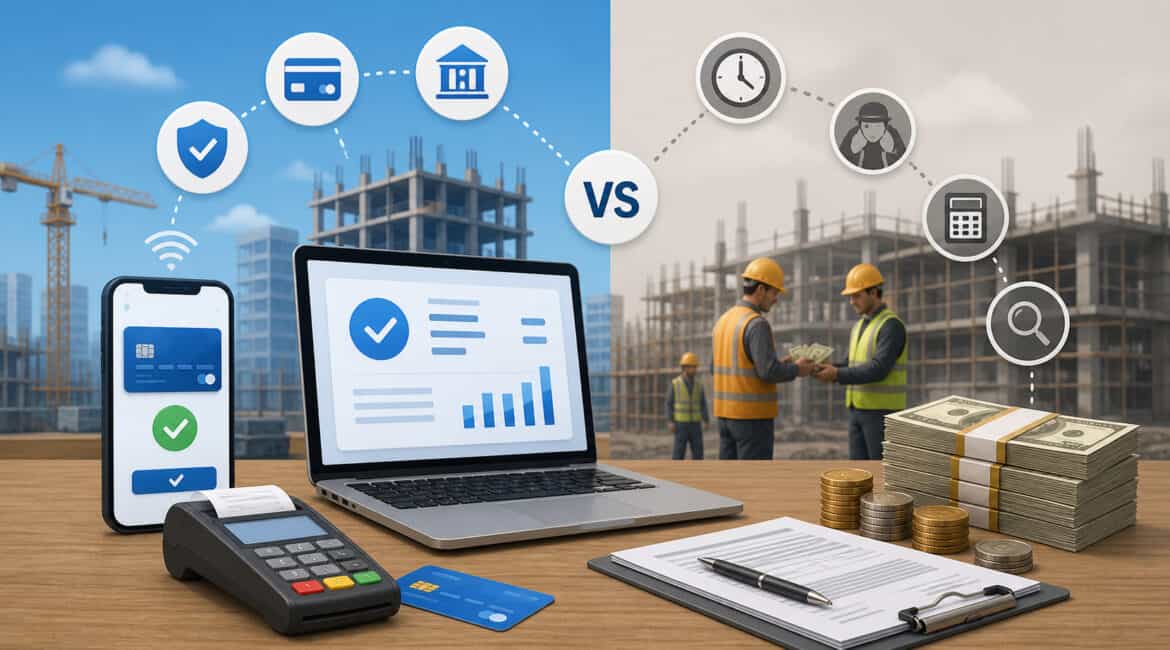
Payment methods matter in construction because money moves at different points in a project: deposits, progress payments, change orders, final invoices, subcontractor payments, emergency repairs, and warranty work. A contractor may collect a small service fee on-site one day and manage a multi-stage billing schedule the next. The way those...
How Payment Processing Works for Contractors
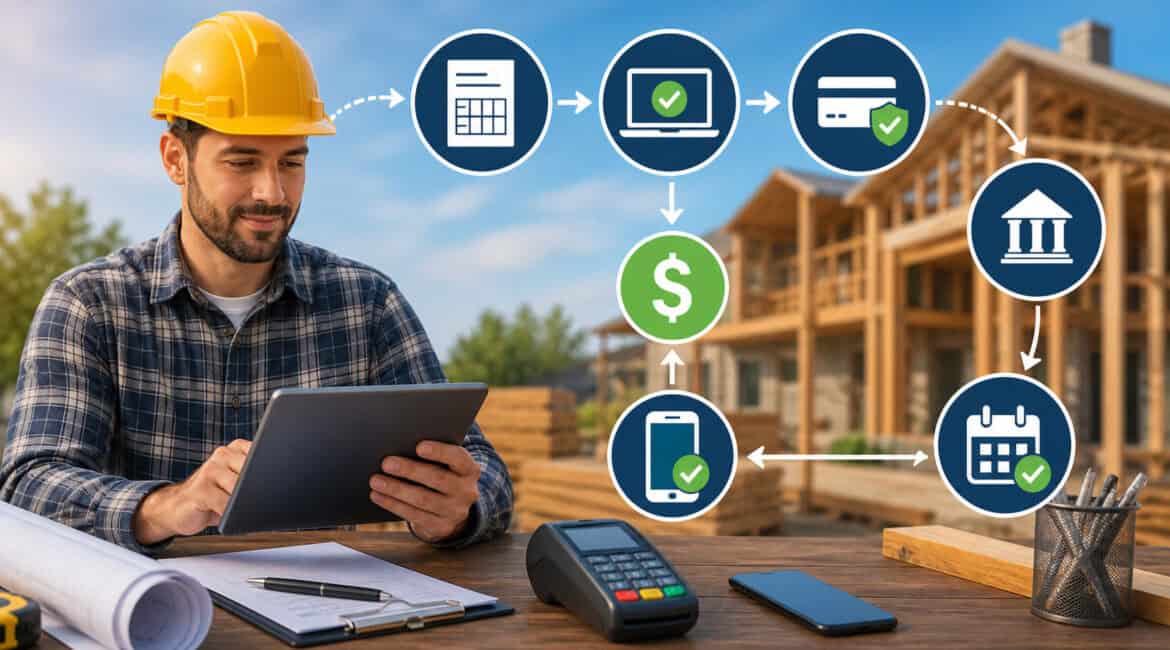
Payment collection is one of the biggest operational challenges in contracting. A project may start with a deposit, move through several progress payments, include change orders along the way, and end with a final invoice that must be collected before the job can be closed out. When payments are slow,...
Same-Day Funding for Contractors: How It Works (Guide for Construction Businesses)
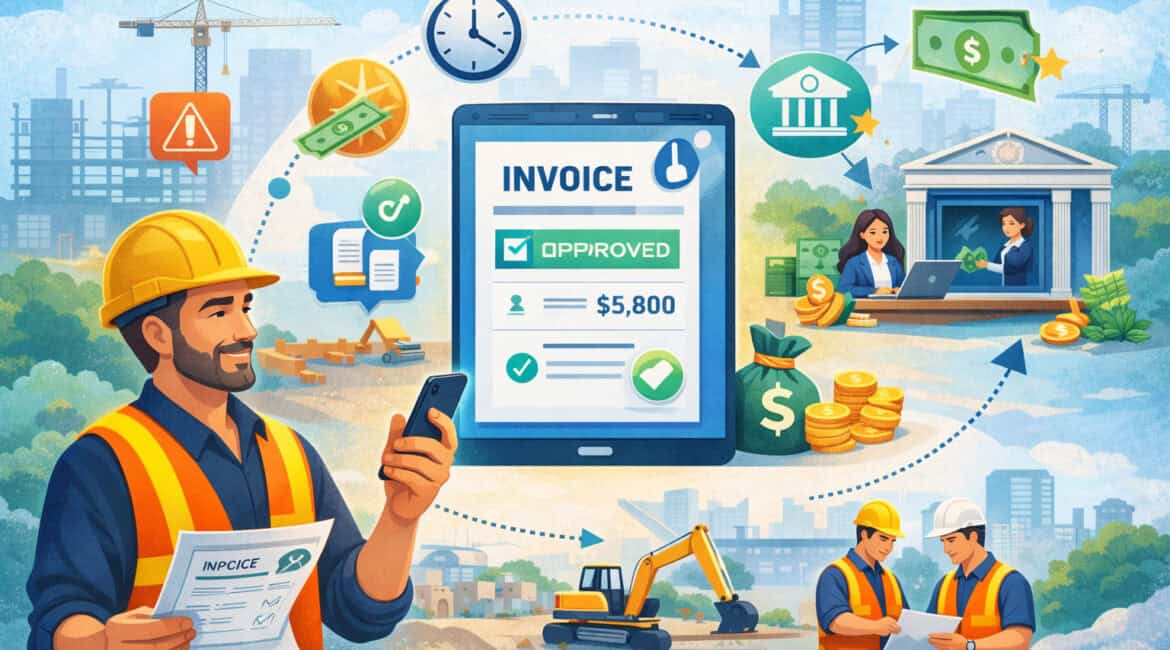
Construction cash flow isn’t just “money in, money out.” It’s payroll hitting on Friday while a progress payment clears next week. It’s a supplier asking for a deposit today, while retainage sits untouched until closeout. It’s a piece of equipment going down mid-job, turning a profitable schedule into a costly...
Tips for Negotiating Better Payment Processing Rates

In today's digital age, payment processing has become an essential part of running a business. Whether you operate an online store or a brick-and-mortar establishment, accepting credit card payments is crucial for attracting customers and increasing sales. However, payment processing rates can vary significantly, and understanding how they work is...
Accepting Online Payments for Construction Bids and Proposals

In today's digital age, accepting online payments has become a necessity for businesses across various industries, including the construction sector. The traditional methods of accepting payments, such as checks and cash, are gradually being replaced by more convenient and secure online payment systems. This article will explore the benefits of...