By alphacardprocess January 25, 2026
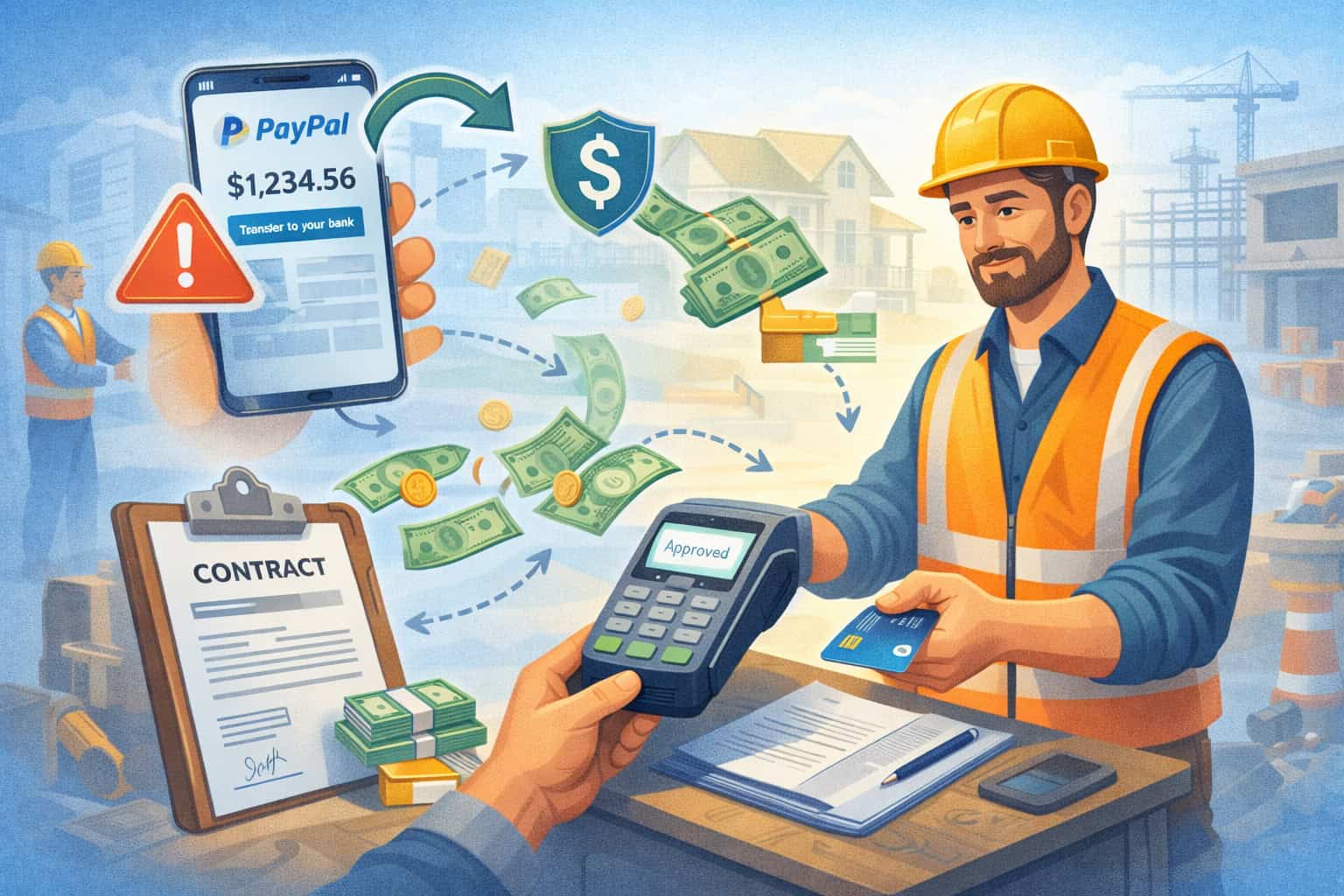
Contractors don’t just “take payments.” You manage deposits, progress billing, change orders, retainers, invoices, on-site card swipes, and occasional disputes—all while juggling tight margins and unpredictable schedules.
That reality is exactly why relying on a personal PayPal-style account can quietly cap your growth, create cash-flow surprises, and raise avoidable risk with holds, closures, and limited tools.
A dedicated merchant account is built for real business payment volume and contractor-style workflows. It’s underwritten for your trade, aligned to your ticket size, and designed for predictable funding and stronger control over disputes.
It also connects to the systems contractors actually use: invoicing, mobile card readers, virtual terminals, ACH options, and sometimes job management or accounting tools.
Just as importantly, a dedicated merchant account gives you a clearer separation between personal finances and business operations—something lenders, insurers, and enterprise clients increasingly expect.
In this guide, you’ll learn when a personal PayPal setup becomes a liability, what a dedicated merchant account changes, how to reduce chargebacks and payment friction, and how to choose the right setup for the way contractors get paid today—and how payment expectations are likely to evolve next.
The Payment Reality for Contractors (And Why “Simple” Payment Tools Break)

Contractor payments are rarely a single swipe at the end of the job. More often, you collect a deposit to schedule labor and materials, then bill at milestones, add change orders, and finalize after punch-list completion.
That structure creates unique payment risk: larger ticket sizes, delayed delivery, and a higher chance of “friendly fraud” or misunderstandings when homeowners compare what they expected versus what was delivered.
A dedicated merchant account is built for these real-world patterns, while personal payment tools are built for casual, low-risk transfers.
Another challenge is the mix of payment channels. Contractors take card-present payments in the field, card-not-present payments over the phone, invoice links by email/text, and bank transfer options for higher amounts. Each channel comes with its own fraud profile and compliance requirements.
A dedicated merchant account typically supports this variety under one underwritten relationship, while a personal PayPal approach may limit channels or trigger reviews when your activity looks “business-like” rather than personal.
Cash flow is the other pressure point. Contractors pay crews and suppliers on strict timelines. If a processor holds funds due to a “risk review,” you may be forced to float payroll or materials. That can turn a profitable job into a stressful month.
A dedicated merchant account often provides clearer funding schedules, better transparency, and account-level support when something goes wrong.
Personal PayPal vs. Business Payments: Where the Risk Actually Shows Up

A personal PayPal-style account can feel convenient early on: quick signup, no underwriting conversation, and fast access to basic invoicing. The problem is that convenience can hide structural risk.
Personal platforms often rely on automated monitoring to detect patterns that resemble higher-risk business activity—like larger tickets, recurring invoices, higher dispute rates, or sudden volume spikes during busy seasons. Contractors hit those patterns naturally.
When an automated system flags your account, the impact is rarely minor. You can see delayed transfers, rolling reserves, limited features, or even an account limitation that prevents accepting payments.
Contractors often discover these limitations only after taking a deposit or completing a milestone—exactly when you need your funds to pay for materials and labor.
Another issue is pricing clarity. Personal platforms may advertise simple rates, but contractors frequently need key features—like keyed transactions, invoice links, or manual entry—that can cost more.
You can also pay more indirectly through higher dispute exposure if you lack tools like strong receipts, customer signatures, and clear invoice documentation. With a dedicated merchant account, pricing is usually more structured and can be optimized around your true mix of card-present, keyed, and invoice transactions.
Finally, personal tools can make it harder to look “established” to larger clients. Property managers, commercial clients, and higher-end homeowners may expect card acceptance through a business-branded checkout, professional receipts, and payment terms that reflect a legitimate contractor operation.
A dedicated merchant account helps you present that professional payment experience consistently—without mixing personal identity and business billing.
What a Dedicated Merchant Account Is
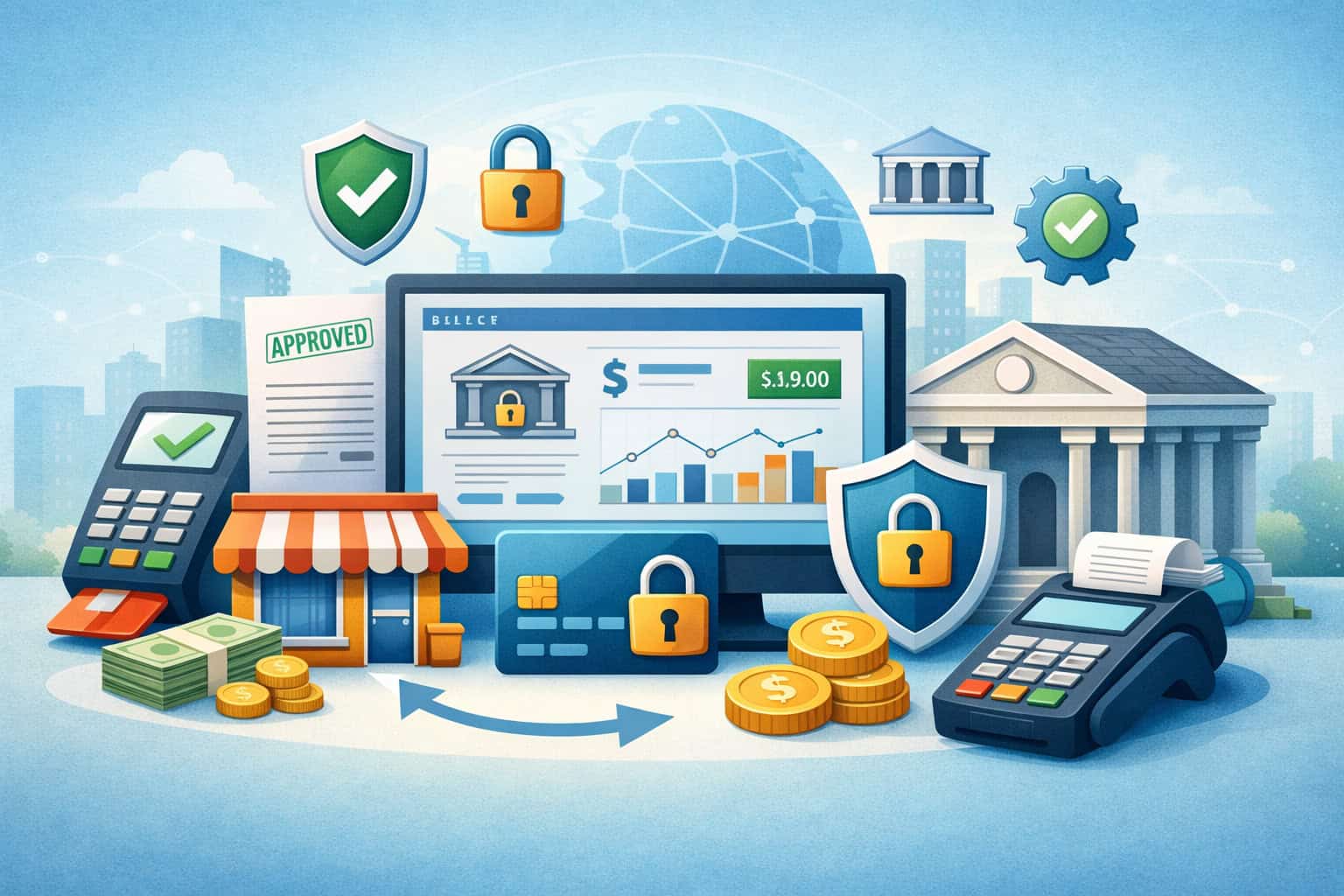
A dedicated merchant account is a business payment account that’s underwritten specifically for your company, your trade, and your transaction profile. It connects your business to card networks through a processor and acquiring bank, allowing you to accept credit and debit payments in a controlled, scalable way.
Unlike a personal wallet-style account, a dedicated merchant account is designed for long-term processing stability and professional tools.
Underwriting is a major difference. Instead of letting anyone process first and “review later,” a dedicated merchant account is generally set up with your business details, average ticket size, expected monthly volume, and how you deliver services.
That underwriting step often leads to fewer surprises later—because the processor already understands your business model. For contractors, that matters: deposits, progress billing, and job completion timelines can otherwise look risky to automated systems.
A dedicated merchant account also supports multiple acceptance methods under one umbrella. You can run payments through a mobile card reader, a virtual terminal for phone payments, invoice links for remote approvals, and sometimes recurring billing for maintenance plans.
You also get tools for reporting, reconciliation, and dispute management that are designed for business use.
Most importantly, a dedicated merchant account can be configured for contractor-specific risk controls: clear descriptors on statements, customer receipts, refund workflows, and sometimes enhanced verification.
That combination of stability, tools, and control is why contractors often outgrow personal PayPal-style payments faster than they expect.
The #1 Reason Contractors Get Burned: Payment Holds and Sudden Limitations
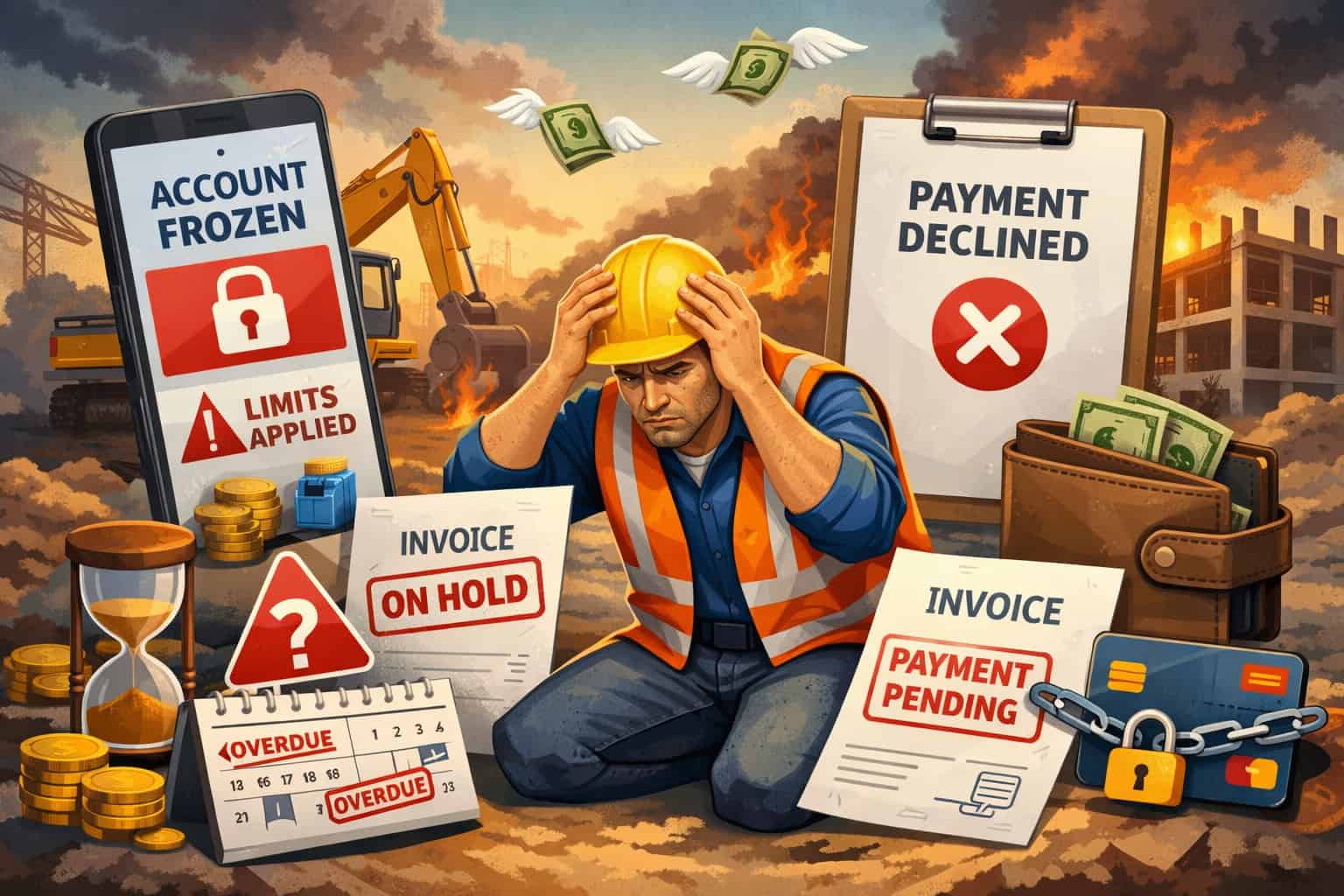
For contractors, a payment hold is not a mild inconvenience—it’s a business interruption. You may have already purchased materials, scheduled subcontractors, and committed labor hours. If a personal PayPal-style account freezes a deposit or milestone payment, you’re forced to either delay the job or fund it from savings or credit. Either option is expensive.
Holds often happen for predictable reasons in contracting. Tickets can be large. Customers sometimes pay from a card not physically present. Volume can spike during peak season or after a storm event.
Refunds can occur if a job is postponed. Even a small uptick in disputes can trigger automated reviews. Personal platforms may not offer fast, human escalation, and they may request documentation while your funds remain unavailable.
A dedicated merchant account reduces this risk by aligning expectations before you process. If your normal job deposit is $2,500 and your average ticket is $8,000, that can be built into your profile. If you do progress billing, that can be documented.
If you work with commercial clients that pay larger invoices, your account can be structured for that reality. The goal isn’t “no reviews ever”—it’s fewer surprises and clearer pathways to resolve issues when they arise.
Contractors also benefit from better operational controls: setting invoice terms, collecting signed authorizations, and using proper descriptors so customers recognize the charge. Those details reduce disputes, which reduces risk flags, which reduces holds.
Over time, this stability becomes a competitive advantage because you can schedule confidently, pay vendors on time, and grow without fearing your payment system will suddenly shut down.
Pricing, Fees, and the Hidden Cost of “Convenient” Payment Apps
Contractors often compare rates and assume a personal PayPal solution is cheaper because the pricing looks simple. The reality is that total payment cost depends on how you accept payments (tap/swipe vs. keyed vs. invoice link), the cards customers use, and how often you deal with refunds or disputes.
Convenience pricing can become expensive as soon as you start taking more remote payments or larger tickets.
A dedicated merchant account may offer pricing structures that better match contractor behavior. For example, if you run many card-present transactions on-site, your effective rate may improve compared to always keying payments.
If you accept higher-ticket invoices, bank transfer options like ACH can lower costs significantly for large jobs. Many contractors also benefit from clearer reporting that shows where fees come from, making it easier to adjust processes and reduce costs.
Disputes are another hidden expense. Chargebacks can cost fees, time, and future processing risk. If your tools don’t support strong documentation—signed approvals, itemized invoices, proof of completion—you can lose disputes even when you did the work.
A dedicated merchant account usually includes better dispute workflows and evidence submission tools, which can reduce losses and protect your account standing.
There’s also the cost of limitations. If a personal platform restricts your account during a busy season, the “rate” doesn’t matter anymore because you can’t get paid. For contractors, reliability is part of pricing.
A dedicated merchant account is often the more cost-effective choice when you factor in cash flow stability, better payment mix options, and fewer operational interruptions.
Contractor Cash Flow: Deposits, Progress Billing, and Retainage Need the Right Setup
Contractors live on cash flow. You buy materials upfront, schedule crews, and manage job timelines that can shift due to permitting, inspections, and weather. Your payment system must support deposits, progress payments, and final invoices without causing confusion or disputes.
A dedicated merchant account helps you structure payments professionally. You can send itemized invoices with clear milestones: “Deposit to schedule,” “Materials delivered,” “Rough-in complete,” “Final after walkthrough.”
That clarity reduces customer anxiety and lowers the chance they dispute a charge because they forgot what it was for. You can also standardize how you collect authorization for card-not-present payments, which is critical for contractor disputes.
For larger jobs, contractors often face retainage or partial holds from the customer’s side. The best payment setup supports partial payments, open invoices, and easy receipts that show what’s been paid and what’s outstanding.
Some dedicated merchant account solutions integrate with invoicing and accounting workflows so you can reconcile payments against specific jobs without manual guesswork.
Another major advantage is adding lower-cost rails for big invoices. When a homeowner or commercial client is paying $10,000 or $25,000, ACH can be attractive. A dedicated merchant account provider may offer ACH and card acceptance in one platform, letting customers choose what’s best while you control cost and funding speed.
As contractor payment expectations evolve, customers increasingly want digital convenience with professional documentation. A dedicated merchant account supports that future: fast pay links, mobile terminals, and bank transfers—all backed by underwriting that expects contractor cash-flow patterns.
Disputes and Chargebacks: How Dedicated Merchant Accounts Protect Contractors
Chargebacks are one of the most painful contractor payment issues because they mix money, time, and reputation. The customer calls their card issuer, funds are reversed, and you have to prove the job and authorization.
Contractors are especially vulnerable when they accept remote payments without strong documentation or when the customer doesn’t recognize the charge on their statement.
A dedicated merchant account usually provides better tools to prevent and fight disputes. Prevention starts with clear billing descriptors—so the customer sees your business name, not something confusing.
It includes professional receipts, signed estimates, itemized invoices, and proof of delivery or completion. Many contractor-friendly setups also support customer signatures on mobile devices and store receipts and authorizations for quick retrieval.
When a dispute happens, evidence quality matters. Winning often depends on showing the contract, the scope of work, change orders, customer approval, the timeline, and communication history.
With the right merchant platform, you can upload this evidence efficiently and track dispute status. Personal PayPal-style platforms may offer dispute processes, but contractors often need deeper documentation tools and clearer workflows that align with card network requirements.
A dedicated merchant account also helps you monitor dispute ratios and address patterns early. If you see an increase in “services not as described,” it may signal that your invoice language needs to be clearer or that you should capture change orders more consistently.
These process improvements are easier when your payment data is organized and your dispute toolkit is built for business.
As payment fraud and friendly fraud continue to rise, contractors will increasingly need professional dispute readiness. A dedicated merchant account is less about “processing cards” and more about building a defensible payment operation.
Professionalism and Trust: Winning Better Clients With Better Payment Options
Contractors often focus on craftsmanship, but payment experience is part of perceived professionalism. Customers judge how you invoice, how you communicate terms, and how easy it is to pay. Commercial clients and property managers may require card acceptance, digital receipts, and clean documentation for their own accounting.
A dedicated merchant account helps you present a consistent, professional brand at the payment step. You can send branded invoices, accept cards through a secure checkout link, and provide receipts that look like a real business—because you are one.
This can directly affect close rates: when a customer is ready to approve a deposit, you want payment to feel easy and trustworthy, not like sending money to a personal account.
Trust also shows up in policies. Professional payment setups let you communicate refund terms, cancellation policies, and change order approvals more clearly. Customers don’t like surprises, and chargebacks often start as frustration.
When your invoices and receipts clearly reflect the job scope and payment schedule, customers feel more comfortable paying upfront deposits and progress payments.
For contractors who want to grow into higher-value projects, payment operations become a sales asset. It’s easier to justify premium pricing when every touchpoint—estimate, contract, and payment—feels organized and legitimate.
The right dedicated merchant account also supports multiple payment methods, including cards, ACH, and sometimes financing options through partners, which can increase average ticket size by reducing customer budget friction.
In the next few years, expect even more customers to prefer tap-to-pay, text-to-pay links, and instant digital receipts. Contractors who adopt a dedicated merchant account early will be positioned as modern, reliable, and easy to work with.
Compliance, Security, and Separation: Protecting Your Business and Personal Finances
Contractors handle sensitive payment information—card numbers, billing addresses, and personal details. Even if you’re not “a tech company,” you still carry responsibility.
A dedicated merchant account typically comes with business-grade security expectations and tools, including PCI-related guidance, tokenization through terminals or gateways, and safer ways to accept payments without storing card data in risky places.
Personal PayPal-style methods can blur lines. When business and personal money mix, bookkeeping becomes harder, taxes become messier, and audit trails weaken.
A dedicated merchant account supports cleaner separation through business statements, consistent reporting, and easier reconciliation. This isn’t just about convenience—clean records help with financing, insurance questions, and long-term business valuation.
Security is also operational. A dedicated merchant account often supports user roles for staff, so a project manager can send invoices without having full access to refunds or bank details.
You can control who can key in transactions and who can issue credits. Personal tools are rarely designed for multi-user business controls, which can create internal risk as you grow.
As payment security standards tighten and fraud methods evolve, contractors will benefit from systems that reduce liability. Expect more emphasis on secure payment links, customer authentication, and stronger verification for card-not-present transactions.
A dedicated merchant account aligned with modern gateways and mobile terminals can help you adapt without rebuilding your payment process every year.
Must-Have Features Contractors Should Look For in a Dedicated Merchant Account
A dedicated merchant account is only as good as the tools attached to it. Contractors should prioritize features that reduce friction for customers and reduce risk for the business.
First, you want flexible acceptance methods: mobile card reader for on-site payments, virtual terminal for phone payments, and invoice links for remote approvals. Many contractors also need the ability to take deposits and partial payments against a single invoice, with clear receipts that show what’s been paid.
Second, you need contractor-friendly invoicing. That means itemization, change order support, custom terms, and the ability to attach documents like estimates or photos. The more clearly the customer understands the charge, the lower your dispute risk.
Third, look for strong dispute and documentation tools. You want to store signed authorizations, capture signatures at payment, and export evidence quickly if a chargeback occurs. Having this built into the payment workflow saves hours when disputes happen.
Fourth, consider funding speed and transparency. Contractors should ask about standard deposit timing, weekend/holiday impact, and what triggers holds. A dedicated merchant account provider should be able to explain risk controls.
Finally, consider cost-saving options like ACH for larger invoices and surcharging or cash discount programs where allowed and appropriate (with proper compliance). Not every contractor will use these, but having options gives you leverage as your average ticket grows.
Choosing the right dedicated merchant account is about matching your real workflow—not the cheapest advertised rate. The best setup is the one that helps you get paid reliably, reduce disputes, and look professional on every job.
How to Switch From Personal PayPal to a Dedicated Merchant Account Without Losing Momentum
Switching payment systems can feel risky because contractors don’t want billing interruptions. The best approach is a controlled transition that preserves customer convenience while improving your backend stability.
Start by keeping your existing method available for a short overlap period while you introduce your new dedicated merchant account payment options.
For example, send new invoices through the dedicated merchant account platform while allowing existing customers with an open balance to pay the old way for a limited time. This prevents confusion and reduces late payments.
Next, update your estimates, contracts, and payment authorization language. Clear terms help prevent disputes and align expectations. If you take deposits, specify what the deposit covers, what triggers progress payments, and how change orders are approved. Your dedicated merchant account tools will work best when your paperwork is consistent.
Then, set up your payment channels thoughtfully. Use card-present for on-site payments whenever possible because it typically reduces fraud and disputes.
Use invoice links for remote payments so customers can enter their card information themselves—this is often safer than keying it in. For larger invoices, offer ACH as an option to reduce fees and make it easier for customers who prefer bank transfers.
Finally, train any staff who handle invoicing. A dedicated merchant account adds control and capability, but only if your team uses it consistently—especially around documentation, receipts, and approvals.
The goal isn’t just to “replace PayPal.” It’s to build a payment process that supports growth, protects cash flow, and strengthens customer trust—exactly what a dedicated merchant account is designed to do.
Future Prediction: Where Contractor Payments Are Headed Next
Contractor payments are moving toward faster, more digital, and more documented experiences. Customers increasingly expect to approve estimates online, pay deposits by card or bank transfer instantly, and receive receipts and project updates in real time. This trend is shaping what contractors will need from a dedicated merchant account going forward.
First, invoice links and text-to-pay will become standard. Customers want to pay from a phone in under a minute. Contractors who can send a secure pay link immediately after an estimate approval will win jobs faster and reduce delays in scheduling. A dedicated merchant account integrated with mobile invoicing supports that speed.
Second, bank transfers will gain traction for larger tickets. As more customers get comfortable with digital bank payments, contractors will use ACH more often to reduce processing costs and lower the friction of large card charges. The best dedicated merchant account setups will make it easy to offer both cards and bank transfers without juggling providers.
Third, fraud controls will tighten. Expect stronger verification, better customer authentication for remote payments, and more pressure to keep documentation organized.
Contractor disputes are likely to remain common because services are delivered over time, and expectations can shift. A dedicated merchant account with modern dispute tools will become less optional and more foundational.
Finally, real-time funding expectations will rise. Contractors will want faster access to money to cover materials and payroll. While instant funding isn’t universal, providers are moving toward faster settlement options for qualified businesses.
Over time, contractors with stable processing histories in a dedicated merchant account position themselves to benefit from faster funding programs.
FAQs
Q 1: Is a dedicated merchant account worth it for a small contractor?
Answer: Yes, a dedicated merchant account can be worth it even for a small contractor—especially if you take deposits, invoice customers, or process higher-ticket jobs. Small contractors often assume dedicated merchant accounts are only for big companies, but the real deciding factor is risk and workflow.
Contractors frequently have delayed delivery (work happens over days or weeks), changing scopes, and payments that don’t look like a retail purchase. Those conditions are exactly what can trigger limitations in personal PayPal-style accounts.
A dedicated merchant account helps by aligning your processing profile with your actual business model. That means fewer “surprise” reviews when you land a bigger job or have a busy month. It also means better tools for invoicing, receipts, and documentation—critical for preventing and winning disputes.
If you’re still doing occasional small side jobs with minimal invoicing, a simple solution might work temporarily. But once you depend on predictable funding to pay for materials and labor, reliability becomes more valuable than convenience.
For most working contractors, the stability and professionalism of a dedicated merchant account pays for itself through fewer interruptions, fewer disputes, and better customer trust.
Q 2: What’s the difference between a dedicated merchant account and a payment aggregator?
Answer: A payment aggregator typically groups many users under one master account and uses automated systems to manage risk. That’s why signup can be fast and why personal PayPal-style tools feel easy at first.
The tradeoff is that your account can be monitored, limited, or held based on patterns that the system considers risky—sometimes without much context for contracting work.
A dedicated merchant account is underwritten for your specific business. You’re not just “one of many” under the same umbrella. Your trade, average ticket, volume, and payment methods are reviewed and approved up front.
This often results in more predictable processing because the provider already expects contractor patterns like deposits and progress billing.
For contractors, the practical difference shows up when something changes: you land a big job, your ticket size increases, or your volume spikes. Aggregators may react by holding funds.
A dedicated merchant account is more likely to handle growth smoothly because it’s designed for an ongoing business relationship, not casual payments. It also typically offers more robust features for invoicing, reporting, and dispute management.
Q 3: Can I still accept PayPal if I have a dedicated merchant account?
Answer: Yes, many contractors keep PayPal available as one of several payment methods, especially if certain customers prefer it. The key is not relying on a personal PayPal setup as your primary business payment engine.
A dedicated merchant account can be your foundation for card acceptance, invoicing, and larger-ticket payments, while PayPal remains an optional alternative.
From a business perspective, having multiple payment options can improve close rates. Some customers want to use a credit card for points or financing flexibility.
Others prefer bank transfers. Some may insist on PayPal. A modern payment setup can offer all of these without letting any one method control your cash flow.
The advantage of putting a dedicated merchant account at the center is control: consistent statements, professional receipts, easier reconciliation, and better risk management. If PayPal becomes unavailable for any reason, your business still runs. That redundancy matters for contractors because payment interruptions can stop a job schedule quickly.
Q 4: What documents do contractors usually need to get a dedicated merchant account?
Answer: Most providers will ask for basic business information to underwrite your dedicated merchant account. Common items include business formation details (or DBA documentation), a business bank account, and identity verification.
Contractors may also be asked for a website or proof of services, sample invoices, average ticket size, expected monthly volume, and refund or cancellation policies.
If you do deposits and progress billing, be ready to explain how you structure payments and how long jobs typically take. This is not “extra paperwork for no reason”—it’s how the provider understands your risk profile so you get fewer interruptions later. Clear documentation helps the underwriter approve terms that match contracting reality.
Having organized contracts and invoice templates can also help. Contractors who present professional documentation often get smoother onboarding because it demonstrates how customer expectations are set.
If you plan to accept card-not-present payments frequently, the provider may also recommend specific fraud tools or invoice-link workflows.
Overall, a dedicated merchant account setup is easier when your business has consistent paperwork and clear payment terms—which also reduces disputes and improves customer satisfaction.
Conclusion
Personal PayPal-style payments can work when contracting is small, occasional, and low-ticket. But most real contractors outgrow that stage quickly.
Once you’re taking deposits, invoicing milestones, paying for materials, scheduling crews, and managing disputes, the payment system becomes part of your operations—not a side convenience.
A dedicated merchant account gives contractors what matters most: reliability, professional tools, clearer cash flow, and stronger protection against holds and disputes.
It supports the ways contractors actually get paid—mobile card acceptance, invoice links, virtual terminals, and often bank transfer options for larger tickets. It also helps contractors look more established to better clients, keep business finances separate from personal money, and maintain cleaner records for taxes, financing, and growth.
Looking ahead, contractor payments will only become more digital, more immediate, and more documentation-driven. Customers will expect tap-to-pay, text-to-pay, and instant receipts. Fraud controls and dispute expectations will tighten.
Contractors who build around a dedicated merchant account now will be more stable, more scalable, and more competitive in that future.