By Scott Palmer February 27, 2026
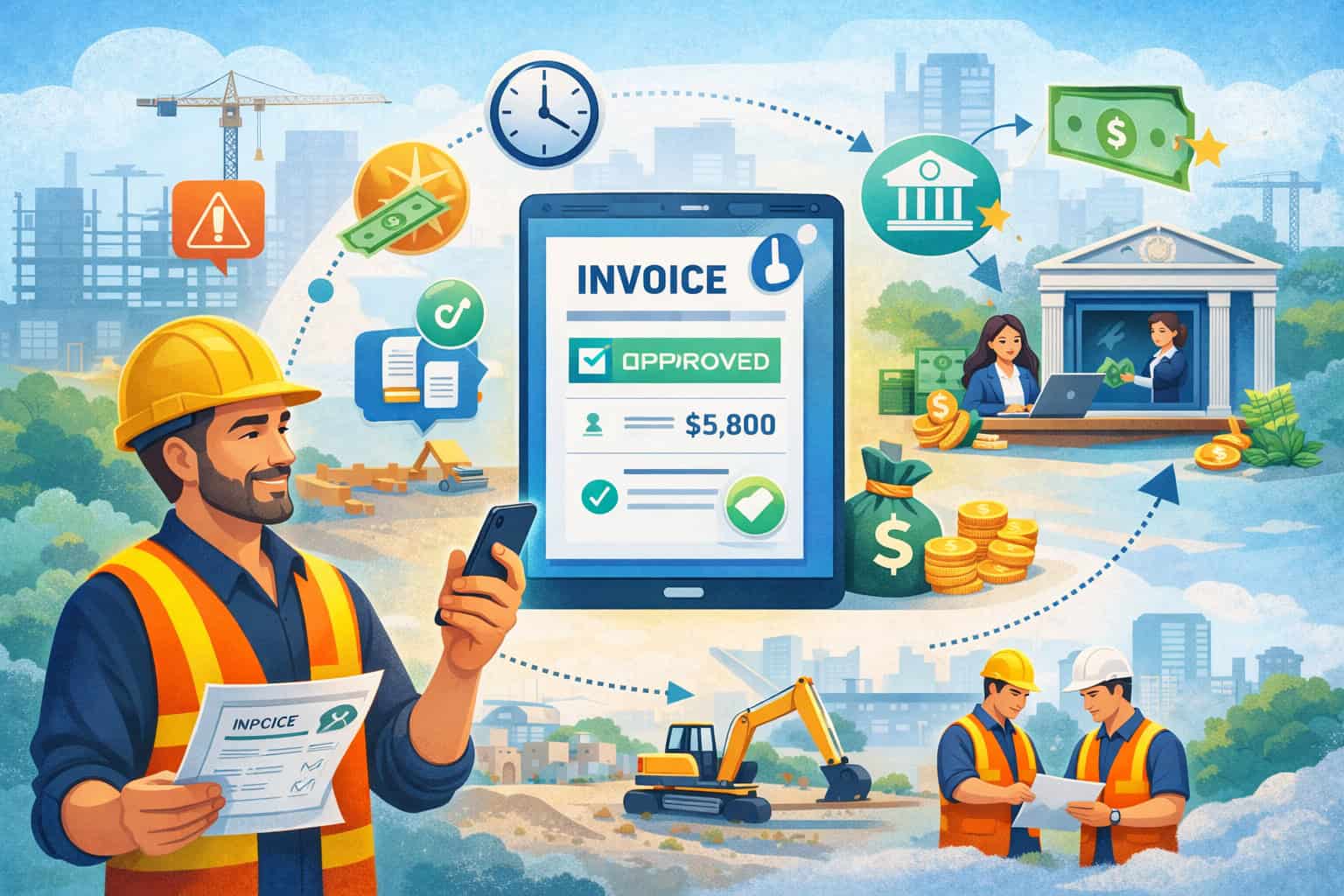
Construction cash flow isn’t just “money in, money out.” It’s payroll hitting on Friday while a progress payment clears next week. It’s a supplier asking for a deposit today, while retainage sits untouched until closeout. It’s a piece of equipment going down mid-job, turning a profitable schedule into a costly delay.
That’s why same-day funding for contractors has become a practical tool—when it’s used carefully. In 2026, faster underwriting, digital banking rails, and specialized construction lenders will make funding quicker than it used to be.
But “same-day” doesn’t mean instant money with no strings attached. It usually means expedited review and rapid disbursement once you’re approved—and the cost, repayment structure, and risks vary widely.
This guide explains same-day contractor financing in plain language: what it really means, the fast funding options for contractors that can make sense, how approvals and payouts work, what costs to watch for, and how to avoid turning a short-term cash gap into a long-term problem.
It’s educational information, not financial advice—use it to ask better questions and choose funding that fits your project reality.
Why contractors seek same-day funding in the first place

Construction businesses aren’t “cash-poor” because the work isn’t real. They’re cash-tight because the timing is brutal. Most projects generate value every day on site, but payments often arrive in chunks—sometimes weeks after the cost has already hit your account.
Common drivers behind urgent funding needs include:
- Payroll deadlines: Crews and subs expect on-time pay. Missing payroll can trigger walk-offs, safety risk, or a damaged reputation.
- Material deposits and supplier terms: Many suppliers require deposits or tighter terms during busy seasons or when pricing is volatile.
- Equipment breakdowns: One unplanned repair can stall production, push you off the schedule, and create penalties or rework.
- Delayed owner or upstream payments: A delay above you can become your emergency—especially when your commitments still run on calendar time.
- Retainage and draw delays: Retainage can trap profit. A slow construction project draw schedule can trap working capital.
Here’s the hard truth: “We’re profitable” can still coexist with “we’re out of cash.” That’s why construction working capital planning matters. Funding isn’t inherently bad; the risk shows up when the repayment schedule doesn’t match how your cash actually moves.
Pro Tip: Treat urgent funding as a “bridge,” not a “solution.” The best fast funding decision is the one you can repay from confirmed inflows (approved draws, signed change orders, or scheduled owner payments)—not hope.
What “same-day funding” actually means in 2026
In construction finance, “same-day” is more about the disbursement clock than the approval clock. Many lenders can issue a decision quickly, but your funding speed depends on what type of product it is and how the money is delivered.
Expedited approvals vs. expedited disbursement
A true fast timeline often has two steps:
- Fast decision (underwriting): This is where the lender verifies your eligibility. The funding approval process can be minutes to a day for streamlined products, or longer if a deal requires document review, contract verification, or collateral evaluation.
- Fast payout (disbursement): Once approved and documents are signed, money moves via payment rails (ACH, same-day ACH, wire, or instant transfer depending on the provider and bank setup).
Your “same-day” outcome depends on whether your lender can approve quickly and send money quickly.
ACH timing vs. wire: why it matters
- Standard ACH often settles in 1–3 business days depending on cutoff times and bank processing.
- Same-day ACH or expedited funding can send funds faster, but it still depends on cutoff windows and whether both banks support the timeline.
- Wire transfers can be faster for urgent disbursement, but they commonly have higher fees and may require more verification.
Even with fast rails, timing can slip if:
- Documents are incomplete
- A bank account can’t be verified quickly
- There’s a mismatch between the business name and bank account name
- The lender needs extra clarity on contracts or receivables
Realistic expectations
“Same-day” is most realistic when:
- You’re an established business with consistent bank activity
- You have clean documentation (or minimal-doc eligibility)
- The funding product is designed for speed (not heavy collateral review)
- You apply early in the day and meet bank cutoff times
Pro Tip: If you’re trying to cover payroll, apply before the payroll crisis. Once you’re within 24 hours of payroll and missing data, “same-day” becomes less about finance and more about scrambling.
Contractor cash flow realities that make urgent funding common

Construction cash flow problems aren’t always caused by poor management. Often, they’re built into the structure of how projects bill and pay. Understanding these patterns helps you choose the right funding tool—and helps you avoid borrowing to cover a predictable cash cycle.
Retainage and the draw schedule squeeze
Retainage impact on cash flow is significant because it often holds back a portion of each payment until milestones or project completion. That withheld amount might be your profit—or the buffer you planned to use for the next job.
At the same time, the construction project draw schedule may include:
- Billing windows that don’t match when costs hit
- Approval delays from inspections, paperwork, or change order disputes
- Pay-when-paid or pay-if-paid clauses upstream that affect your downstream cash
Why “good work” doesn’t equal “good cash flow”
A contractor can have:
- A full backlog
- Strong margins on paper
- Reliable crews and subs
…and still face cash gaps because expenses arrive daily while receivables arrive in waves.
What this means for funding decisions
You want funding that matches your cash profile:
- If you’re waiting on invoices: accounts receivable financing or invoice factoring for contractors might align with payment timing.
- If you need recurring flexibility: a construction line of credit may support ongoing variability.
- If you need a one-time fix: short-term business loans can work—if repayment aligns with project cash inflow.
Pro Tip: Don’t finance a predictable payment lag with a product that withdraws daily. Daily withdrawals can collide with your draw schedule and create a second cash crunch.
Same-day funding options comparison for contractors
Not every product that funds fast is a fit for construction. Speed is only one variable. You also need to consider repayment structure, cost, and whether the funding source understands construction billing.
Below is a high-level comparison to help you choose the right direction.
Table 1: Same-day funding options comparison (speed, cost range, best use case)
| Funding option | Typical funding speed (after approval) | Cost range (high-level) | Best use case |
|---|---|---|---|
| Invoice factoring / AR financing | Same-day to 1–2 days | Factor/discount fees; varies by debtor & terms | Cover gaps while waiting on invoices from creditworthy customers |
| Short-term working capital loan | Same-day to a few days | APR/fees vary widely | One-time needs like payroll bridge, urgent materials, or cash gap smoothing |
| Line of credit | Same-day draws after setup | APR/fees depend on usage | Ongoing working capital swings across multiple projects |
| Equipment financing | Days to a week (sometimes faster) | APR/fees based on asset & credit | Replace/repair/upgrade equipment without draining cash |
| Merchant cash advance (MCA) | Often same-day | Factor rate; can be expensive | Emergency liquidity when other options don’t qualify (use caution) |
| Purchase order financing | Days to a week | Fees depend on supplier/customer structure | Large material orders when customer payment is later and supplier needs upfront |
These are instant funding solutions for construction businesses only in the sense that they can be faster than traditional long-cycle loans. Your actual timeline depends on documentation and underwriting.
Invoice factoring and accounts receivable financing for contractors
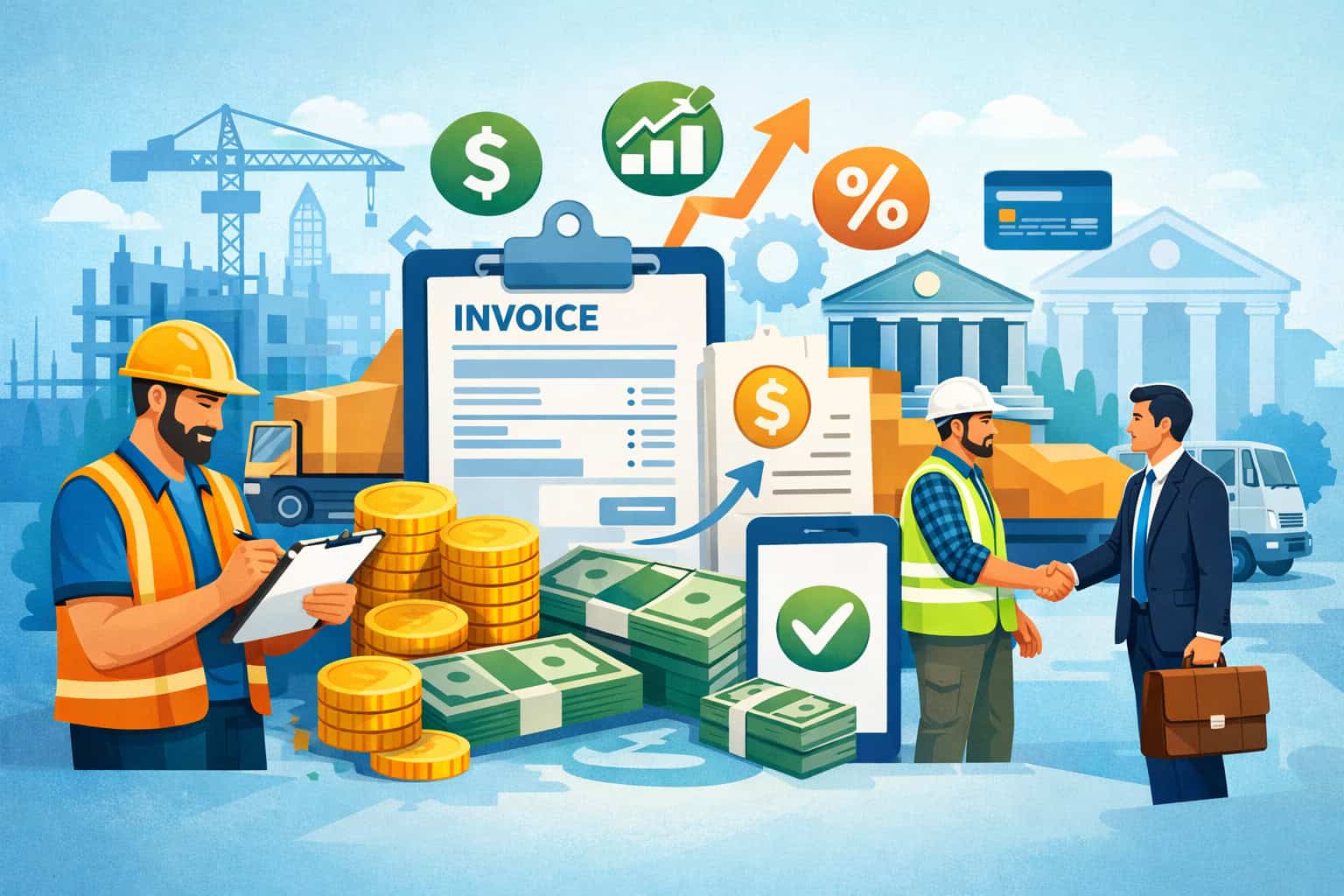
When contractors hear “factoring,” they sometimes assume it’s only for trucking or retail. In reality, invoice factoring for contractors can work well in certain construction setups—especially when you’re billing creditworthy entities and facing long payment cycles.
How it works
In simple terms:
- You issue an invoice for completed work (or approved progress billing).
- A financing company advances a portion of that invoice value.
- When your customer pays, the financier collects, then releases the remaining balance minus fees.
Some structures look like “factoring” (the financier buys the receivable), while others look like accounts receivable financing (a loan secured by receivables). The practical difference often comes down to who controls collections and how the arrangement is documented.
Typical approval factors (contractor reality)
Approval often focuses less on your credit score and more on:
- The credit strength and payment history of your customer
- Clear proof of delivery/completion and invoice validity
- Clean lien compliance practices and documentation
- A consistent billing process and AR tracking
If you’re billing against approved pay apps or documented milestones, that can help. If invoices are frequently disputed or change orders are messy, approvals may slow.
Repayment structure and risks
Repayment typically happens when the invoice pays. That’s a natural alignment—if your receivables are reliable. Risks include:
- Disputes that delay payment
- Slow-paying customers that increase total fees
- Concentration risk (one customer dominates AR)
- Administrative complexity (notice of assignment, collection coordination)
Pro Tip: Factoring is strongest when your billing is clean and your customer pays reliably—even if slowly. If your invoices are frequently disputed, fix the billing process before relying on factoring.
Short-term working capital loans and payroll bridge financing
Sometimes you don’t have time to wait for receivables to turn into cash. A short-term loan can provide immediate working capital for urgent needs—especially payroll, materials, or a temporary cash flow dip between draws.
How it works
A lender provides a lump sum. You repay over a short period (often months, not years) using:
- Fixed periodic payments (weekly or monthly)
- Sometimes more frequent withdrawals, depending on the product
This category includes many variations. Some are transparent, interest-based loans. Others bundle fees into the payoff amount. That’s why reading terms matters.
What approvals often look at
In 2026, underwriting for fast loans often focuses on business performance and documentation quality, including:
- Bank statement trends (cash in/out consistency)
- Revenue consistency and seasonality
- Time in business and industry stability
- Existing debt obligations and repayment capacity
Some lenders may consider contract value and pipeline, but most fast products rely heavily on bank activity.
Risks and contractor-specific considerations
Short-term loans can be useful—but risky if repayment doesn’t match your cash inflow pattern. Common problems:
- Repayment begins immediately, before your next draw clears
- Weekly payments collide with payroll cycles
- You “borrow to repay,” creating stacking risk
This is where payroll bridge financing becomes a double-edged sword: it solves payroll now, but if the project cash doesn’t arrive on schedule, you can end up financing the bridge itself.
Pro Tip: Before taking a short-term loan, map payments against your expected draw dates. If repayment starts before the draw is likely to hit, you may be setting up a second emergency.
Construction line of credit: flexible funding when managed well
A construction line of credit can be one of the most practical tools for contractor cash flow management because it matches how construction operates: variable costs, uneven receipts, and the need to move quickly.
How it works
A line of credit is a revolving facility:
- You’re approved for a limit.
- You draw only what you need.
- You repay and re-borrow as needed (within the terms).
Once the line is established, future draws can be fast—sometimes same-day—because the underwriting is already done.
Typical underwriting criteria
A line of credit often requires more upfront review than a one-time fast loan. Lenders may evaluate:
- Underwriting criteria (credit score, time in business, revenue) trends
- Business financial statements (sometimes)
- Bank statements and cash flow consistency
- Existing debt and utilization patterns
- Collateral, depending on the product (some are unsecured, others secured)
Repayment structure and risks
Repayment typically includes interest on what you use, plus potential fees. Risks include:
- Treating the line like permanent capital rather than a bridge
- Carrying a high balance through slow seasons
- Misusing it for low-margin work that can’t absorb financing costs
Lines of credit work best when you use them to support profitable, revenue-generating work—and when you have a plan to pay down balances as invoices clear.
Pro Tip: A line of credit is not “extra profit.” Build it into your cash flow forecasting for contractors so you know when to draw and when to pay down.
Equipment financing: protecting cash while keeping production moving
Equipment downtime is expensive in construction. When a critical machine fails, the cost isn’t only repair—it’s schedule disruption, labor inefficiency, and sometimes penalties. Equipment financing can be a targeted solution that funds the asset without draining working capital.
How it works
Equipment financing typically involves:
- A loan or lease secured by the equipment
- The lender paying the vendor directly or reimbursing you
- You repaying over a set term
Because the equipment itself is collateral, approvals can sometimes be smoother than unsecured working capital—though timelines depend on the asset, documentation, and vendor process.
Approval considerations
Lenders often look at:
- The equipment’s age, type, and resale value
- Your time in business and revenue trend
- Business and personal credit profile (varies)
- Down payment requirements (sometimes)
Repayment and risks
Repayment usually spans years rather than months, which can reduce monthly pressure compared to very short-term products. But risks still exist:
- Financing equipment that isn’t truly essential or revenue-producing
- Overestimating utilization (buying capacity you won’t use)
- Maintenance costs that remain even after financing
Pro Tip: Use equipment financing for assets tied to billable production or measurable efficiency—not for “nice-to-have” upgrades during a tight cash period.
Merchant cash advance: high-level explanation and why contractors must be careful
A merchant cash advance (high-level explanation) is often marketed as quick money. In construction, it can be tempting when banks say no. But it’s also one of the easiest ways to create a cash flow spiral if the repayment mechanics don’t match how contractors get paid.
How it works (simple version)
An MCA provider advances funds and is repaid through:
- A percentage of daily card sales, or
- Daily/weekly ACH withdrawals from your bank account
The cost is often expressed as a factor rate, not an interest rate, and repayment can be frequent.
Approval factors
Approvals may focus heavily on:
- Bank statement activity
- Revenue consistency
- Existing positions (other advances or loans)
- Time in business
Credit score may matter less than cash flow volume—but that doesn’t mean the product is cheap or safe.
Key risks for contractors
Construction revenue is often lumpy. Daily withdrawals can be dangerous when:
- Your payments arrive as periodic draws
- Your bank balance swings sharply between deposits
- You have major weekly outflows (payroll, materials)
High-frequency repayment can compress cash flow and force you to take additional advances—known as “stacking,” which can quickly become unmanageable.
Pro Tip: If repayment is daily, model your lowest-cash weeks—not your best weeks. If the product only works in good weeks, it’s not stable funding.
Purchase order financing: when material buys are the bottleneck
Sometimes the project is ready, the customer is committed, and your team is ready to install—but the supplier needs payment upfront for materials. Purchase order financing can help bridge that gap when the economics and documentation line up.
How it works
In a typical structure:
- You receive a customer order or contract for a project that requires significant materials.
- A financing provider pays the supplier (or funds the purchase) so materials can be delivered.
- You complete the work and invoice the customer.
- Repayment occurs when the customer pays, often coordinated with receivables financing.
Not every construction scenario fits. PO financing often works best when:
- The supplier and customer documentation is clear
- The customer is creditworthy
- The “cost-to-complete” is manageable and predictable
Approval factors
Providers may evaluate:
- Contract terms and scope clarity
- Supplier quotes and delivery timelines
- Customer payment track record
- Margin adequacy (there must be room to absorb financing costs)
Risks and practical concerns
Risks include:
- Change orders or scope shifts that disrupt the expected cost structure
- Delays that extend the financing period and increase costs
- Documentation gaps that slow disbursement
Pro Tip: PO financing is about enabling delivery—not fixing margin problems. If the job is thin-margin, adding PO fees can push it into loss territory.
Approval requirements by funding type and what lenders usually want
Fast approvals aren’t magic. They’re usually the result of standard requirements being ready and easy to verify. Knowing what funders look for helps you avoid delays and choose options you’re likely to qualify for.
Table 2: Approval requirements by funding type (general guidance)
| Funding type | Often required | Common focus areas | Typical deal-breakers |
|---|---|---|---|
| Invoice factoring / AR financing | Invoices, proof of work, customer info, AR aging | Debtor strength, invoice validity, dispute history | Disputed invoices, poor documentation, unreliable payers |
| Short-term working capital loan | Bank statements, basic business info, ID | Cash flow trend, revenue consistency, existing obligations | Overleveraged cash flow, heavy existing withdrawals |
| Line of credit | Bank statements, financials (sometimes), credit review | Stability, utilization plan, repayment ability | Weak trend, unresolved tax issues, high leverage |
| Equipment financing | Equipment details, vendor invoice, business info | Asset value, ability to pay, time in business | Old/low-value assets, unclear ownership |
| Merchant cash advance | Bank statements, processing history (if applicable) | Deposit volume and frequency | Too many existing advances, unstable deposits |
| Purchase order financing | Contract/PO, supplier quote, customer verification | Customer credit, margin, delivery terms | Complex scope, unclear payment path, low margin |
Every lender’s checklist differs, but the “why” is consistent: they want to see a credible repayment path.
Pro Tip: If you can’t explain how repayment matches your draw schedule in two sentences, you probably haven’t found the right funding structure yet.
Cost breakdown explained simply: interest, factor rates, fees, and profit impact
Contractors don’t need fancy finance talk—they need to know, “What does this cost me, and will the job still make money?” Understanding funding costs and fees (APR, factor rate high-level) is critical because fast money can quietly eat your margin.
Interest vs. factor rates
- Interest-based financing (APR): You pay interest over time on the amount borrowed, plus any fees. APR is a standardized way to express cost, but details still matter (fees, payment frequency, term).
- Factor rate products: Cost is often a fixed multiplier on the funded amount (for example, a total payback amount). The effective cost depends heavily on how fast you repay and how payments are structured.
Two products can look similar in dollar cost but feel very different in cash flow because of payment frequency.
Fees and prepayment terms
Common fees can include:
- Origination or administrative fees
- Wire fees or expedited funding fees
- Servicing fees (especially in receivables products)
- Late fees or NSF fees if a withdrawal fails
Prepayment can be helpful—or irrelevant—depending on the product. Some structures reduce cost if paid early; others charge a fixed amount regardless of early payoff. Ask directly how prepayment affects total cost.
Margin impact and total cost of capital
In construction, your margin isn’t “extra.” It covers overhead, risk, and future capacity. Funding should be measured against:
- Gross margin on the job or change order being funded
- The time your cash is tied up
- The real operational benefit (avoid downtime, keep crews working, meet schedule)
A good rule of thumb: don’t use expensive short-term funding for work that can’t absorb it. That’s how profitable-looking projects become cash traps.
Pro Tip: Evaluate funding at the project level: “Does this funding help me finish and bill faster, or am I borrowing just to survive?”
Pros and cons of fast funding options for contractors
Speed helps—but every fast tool has tradeoffs. The key is matching the product to the purpose, and matching repayment to cash inflow.
Table 3: Pros and cons of fast funding options
| Option | Pros | Cons |
|---|---|---|
| Invoice factoring / AR financing | Aligns repayment with receivables; can reduce cash gaps | Fees can add up if invoices pay slowly; disputes can halt funding |
| Short-term loans | Simple use of funds; can cover payroll/materials quickly | Repayment may start immediately; can pressure cash flow |
| Line of credit | Flexible draw/repay; supports ongoing variability | Requires discipline; can become permanent debt if not paid down |
| Equipment financing | Preserves cash; spreads cost over time | Adds fixed payment; asset risk if revenue drops |
| MCA | Fast access; may approve when others won’t | Can be expensive; daily withdrawals can cause cash crunch |
| PO financing | Helps secure materials and keep schedule | Documentation-heavy; requires margin room and reliable customer payment |
Pro Tip: The “best” option isn’t the cheapest on paper. It’s the one that keeps you operational and lets you repay without choking your next payroll cycle.
How to prepare before applying: documents, reports, and contractor-ready planning
Fast funding favors businesses that can prove reality quickly. If your financial picture is scattered, approval slows—or the offer gets priced worse to cover uncertainty.
Organize the essentials
Before applying, gather:
- Recent bank statements (business accounts)
- Basic business info and ownership details
- Current debt obligations and payment schedules
- A clear purpose for funds (payroll, materials, repairs)
Build an AR aging report and clean up receivables
A strong AR aging report shows:
- Who owes you money
- How long invoices have been outstanding
- Patterns of slow payment or disputes
If you’re pursuing receivables-based funding, this is central. Even for loans, it helps you explain your cash gap.
Document your pipeline and contracts
For contractors, credibility often lives in paperwork:
- Signed contracts and work orders
- Approved change orders (where possible)
- Pay app status and expected draw dates
- Schedule milestones that tie to billing
Credit basics (general guidance)
You don’t need perfect credit to qualify for every option, but you do need awareness:
- Check for obvious errors on business and personal credit profiles
- Know your current utilization and recent inquiries
- Avoid applying to too many products at once (it can create friction)
Pro Tip: Write a one-page cash story: “Here’s the gap, here’s why it exists, and here’s how repayment is covered.” This improves decision-making even if the lender never reads it.
Cash flow checklist before applying for funding
Fast capital works best when you’ve already done the math. A quick internal checklist can prevent you from taking funding that creates bigger problems.
Table 4: Cash flow checklist before applying for funding
| Checklist item | What to confirm | Why it matters |
|---|---|---|
| Next 30 days of payroll | Exact dates and total amounts | Payroll is non-negotiable; repayment must not collide |
| Materials and vendor terms | Deposits due, delivery schedules, payment terms | Prevents funding from being diverted unexpectedly |
| Expected customer payments | Realistic dates, not hopeful dates | Avoids “repay before paid” traps |
| Current AR aging | Amounts past due and dispute status | Indicates whether receivables can reliably cover repayment |
| Project draw schedule | Approval steps and typical delays | Helps align financing with cash inflow |
| Retainage exposure | How much cash is locked and when it releases | Avoids overestimating available funds |
| Existing debt withdrawals | Daily/weekly/monthly obligations | Prevents stacking and hidden cash drain |
| Minimum cash balance | The lowest safe operating balance | Protects against overdrafts and failed payments |
| Profit margin on funded work | Margin after labor, materials, overhead | Ensures the job can absorb funding cost |
| Contingency plan | What happens if payment is late | Prevents panic borrowing |
Pro Tip: If your plan assumes every payment arrives “on time,” it’s not a plan. Build in a buffer for approvals, inspections, and paperwork delays.
Risks and warning signs: what can go wrong with same-day funding
The most dangerous funding problems usually start small: one fast product used for a real need. The trouble begins when repayment doesn’t match the job’s cash cycle, and the contractor takes a second product to cover the first.
Debt stacking and the “borrow to repay” pattern
Stacking happens when you add multiple short-term obligations that withdraw frequently. Warning signs include:
- Taking a new product primarily to make payments on another
- Not knowing your total weekly repayment across all products
- Seeing daily withdrawals that reduce your ability to buy materials or fund labor
Unclear repayment schedules
If a provider can’t clearly explain:
- Payment frequency
- Total payback amount
- What happens if a withdrawal fails
- Whether early payoff reduces cost
…that’s a red flag.
High daily ACH withdrawals and draw misalignment
Daily ACH can be brutal in construction because your deposits often come in chunks. A steady daily drain can push your balance below safe operating levels, triggering:
- Missed vendor payments
- Payroll stress
- NSF fees and banking issues
- Operational slowdowns that reduce production
The cash crunch loop
A common loop looks like this:
- Funding covers payroll
- Repayment drains cash before the next draw
- You delay paying a supplier
- Job slows down
- Billing gets delayed
- You need more funding to catch up
Pro Tip: The risk isn’t “fast funding.” The risk is repayment pressure that reduces your ability to perform the work that generates revenue.
Best practices for responsible same-day contractor financing
Fast money can be a smart tool when you treat it like a controlled bridge—tied to a specific purpose and a realistic repayment source.
Use funding for revenue-generating work
Funding is most defensible when it helps you:
- Start or continue a job that will produce billable progress
- Prevent downtime that would delay billing
- Capture a profitable change order with clear approval
Avoid using high-cost funding for overhead that doesn’t produce near-term cash (unless you have a clear repayment plan).
Align repayment with project cash inflow
A responsible structure:
- Uses receivables-based repayment when you’re waiting on invoices
- Uses monthly repayment when your draws are monthly
- Avoids daily withdrawals when your deposits are lumpy
Improve billing and collections processes
Often the cheapest “funding” is faster billing:
- Submit pay apps promptly with complete documentation
- Tighten change order workflows and approvals
- Reduce disputes with clearer scope tracking
- Follow up consistently on overdue invoices
Build an emergency reserve over time
A small cash buffer reduces reliance on expensive funding. Even modest reserves can cover:
- Minor equipment repairs
- Small payroll gaps
- Material deposits that would otherwise require a short-term product
Pro Tip: The goal isn’t “never use funding.” The goal is to use it strategically—then reduce dependency through better cash discipline.
Cash flow improvement alternatives to borrowing
Funding isn’t your only lever. Many contractors reduce emergency needs by tightening operational and contractual cash flow controls.
Negotiate better payment terms (where you can)
Options include:
- Shorter payment cycles or partial upfront deposits
- Milestone-based billing that better matches cost curves
- Early payment incentives (used carefully)
- More frequent billing for long-duration scopes
Even small improvements can reduce the need for fast financing.
Faster billing cycles and cleaner paperwork
Speed comes from process:
- Standardize billing packages (photos, daily logs, lien releases as required)
- Track completion and approvals in real time
- Submit change orders early, not at the end of the job
- Use consistent invoice formats that reduce customer confusion
Retainage planning
Retainage isn’t optional in many projects, so plan for it:
- Treat retainage as “not available cash”
- Protect working capital by not counting retainage toward payroll liquidity
- Consider whether certain receivables tools can help (depending on customer and terms)
Cost control and scheduling alignment
Your schedule is a financial document. When production drifts, costs rise and billing gets delayed. Align:
- Crew scheduling with material delivery
- Sub availability with inspection timing
- Equipment utilization with job sequencing
Pro Tip: If your cash problems increase every time schedules slip, your operational controls might be the best “financing” investment you can make.
Real-world scenarios: choosing the right fast funding tool
No fake stats—just realistic situations contractors face.
Scenario 1: Payroll due Friday, progress payment expected next week
A mid-size subcontractor has a major payroll run in three days. A pay app was submitted and is expected to clear next week, but timing isn’t guaranteed.
A responsible approach could include:
- A short-term bridge product where repayment starts after the expected payment date, or
- Receivables-based financing if the invoice is approved and the payer is reliable
The wrong approach would be daily withdrawals that begin immediately and reduce payroll capacity next week.
Scenario 2: Supplier requires a deposit for a long-lead material
A GC needs to lock in materials to avoid schedule delays. The owner’s payment won’t arrive for two weeks.
Potential fit:
- Purchase order financing (if documentation and margins support it)
- A line of credit draw (if already established)
- A short-term loan with manageable payment timing
The key is ensuring the job’s margin can absorb the funding cost without turning the materials bought into a loss.
Scenario 3: Equipment breakdown threatens a critical deadline
A contractor’s primary machine breaks down. Renting is expensive, but delays are worse.
Potential fit:
- Equipment financing for replacement if the machine drives billable production
- Short-term working capital loan if repair is immediate and revenue impact is clear
The decision hinges on whether the equipment will produce cash flow fast enough to justify payments.
Pro Tip: Tie every funding decision to a specific operational outcome: “This keeps the job moving, protects billing, and repays from a defined inflow.”
30/60/90-day financial stabilization plan for construction businesses
Fast funding is often a symptom of a deeper timing issue. This 30/60/90 plan helps you stabilize without becoming dependent on emergency capital.
Days 1–30: Assess cash flow gaps and apply strategically
Start with clarity:
- Map your next 6–8 weeks of inflows and outflows
- Identify the true gap (how much, and exactly when)
- Separate “urgent” from “important”
- List receivables by likelihood and timing, not by hope
If you apply for funding in this phase:
- Choose a product aligned with your repayment source
- Avoid stacking multiple obligations
- Build a buffer for draw delays and paperwork friction
Actions to complete:
- Create a weekly cash flow forecast
- Tighten invoice submission timelines
- Update your AR aging and follow-up plan
- Prepare documentation to speed underwriting
Pro Tip: In Month 1, speed matters—but structure matters more. “Fast and wrong” is expensive.
Days 31–60: Tighten billing, collections, and job-cost visibility
Month 2 is where you reduce future emergencies:
- Shorten billing cycles (submit faster, follow up sooner)
- Standardize change order approval workflows
- Improve job-cost tracking so you spot margin drift early
- Review vendor terms and negotiate where possible
Operational improvements:
- Build a billing package checklist
- Schedule weekly AR calls with owners/GCs
- Create a process for lien releases and compliance paperwork
- Align project managers with finance on draw timing
Pro Tip: Many contractors don’t have a funding problem—they have a documentation speed problem.
Days 61–90: Reduce dependency on emergency funding
Month 3 is about structural resilience:
- Pay down short-term obligations where possible
- Shift to more flexible tools (like a well-managed line of credit) if appropriate
- Build a small reserve and protect it
- Improve your bidding and contract terms to reduce cash strain
Longer-term moves:
- Evaluate which project types create the worst cash cycles
- Adjust pricing to reflect payment risk and retainage
- Strengthen customer selection and contract review
Pro Tip: If you still need emergency funding every month by Day 90, revisit your billing cadence, contract terms, and project mix—not just your funding source.
FAQs
Q1) What is same-day funding for contractors?
Answer: Same-day funding generally means a financing provider can approve and disburse funds quickly—sometimes within the same business day—once underwriting is complete and documents are signed.
It doesn’t always mean instant approval or guaranteed timing. Your bank’s processing cutoffs and the disbursement method (wire vs ACH) often determine the actual arrival time.
Q2) How fast can contractors get funding?
Answer: Some products can be funded the same day after approval, while others take a few days. Funding speed often depends on documentation readiness, bank verification, and the product type.
Lines of credit may allow faster draws after initial setup, while equipment or purchase order financing may take longer due to verification and documentation steps.
Q3) What credit score is required?
Answer: It varies by funding type and provider. Some options weigh cash flow and receivables more heavily than credit score, while others rely more on credit history.
In general, stronger credit can improve pricing and terms, but it isn’t the only approval factor—time in business, revenue consistency, and documentation quality often matter.
Q4) Is invoice factoring better than a loan?
Answer: It depends on your situation. Factoring can align repayment with receivables and may rely more on your customer’s payment strength. A loan may be simpler if you need unrestricted cash for multiple uses. The better choice is the one that matches your repayment source and keeps your cash flow stable.
Q5) What’s the difference between a line of credit and a short-term loan?
Answer: A short-term loan provides a lump sum with a set repayment schedule. A line of credit is revolving: you draw what you need, repay, and reuse the available limit. Lines can be more flexible for recurring working capital swings, but they require discipline to avoid carrying balances too long.
Q6) Are merchant cash advances safe for contractors?
Answer: They can be risky in construction because repayment often happens through frequent withdrawals that may not align with draw-based revenue.
Some contractors use them as a last resort, but it’s important to understand total payback, payment frequency, and how withdrawals perform during slow weeks. If daily withdrawals would disrupt payroll or materials purchases, it may be a poor fit.
Q7) How much does same-day contractor financing cost?
Answer: Costs vary widely by product type, term, and risk profile. Some products use APR-based pricing; others use factor rates and fees. The “true cost” depends on payment frequency, total payback amount, and how long you carry the balance. Always ask for the total repayment amount and how prepayment affects cost.
Q8) Can new construction businesses qualify?
Answer: Newer businesses may qualify for certain options, but terms and limits can be tighter. Providers may rely more on bank activity, signed contracts, personal credit, or collateral. Preparing clean documentation and demonstrating predictable cash inflows can improve your chances.
Q9) What documents are required?
Answer: Common documents include bank statements, business and ownership information, identification, and sometimes financial statements. Receivables-based products may require invoices, proof of work, and an AR aging report. Equipment financing typically requires asset details and vendor invoices.
Q10) How does retainage affect funding decisions?
Answer: Retainage reduces available cash because part of your earned revenue is withheld until later milestones or closeout. If you rely on retainage as a “cash source,” you may underestimate your gap. Build retainage into your forecast as unavailable cash, and avoid repayment schedules that assume retainage will release quickly.
Q11) Will same-day ACH always hit the same day?
Answer: Not always. Same-day ACH can speed up delivery, but bank cutoff times, verification steps, and processing windows still apply. Wires may be faster in some urgent cases, but they often cost more.
Q12) Can I use fast funding for materials and equipment together?
Answer: You can, but mixing purposes can blur repayment planning. It’s often cleaner to match the funding tool to the expense: equipment financing for equipment, receivables-based funding for invoices, and short-term working capital for temporary gaps. Clear purpose improves underwriting and reduces misuse risk.
Q13) What are signs I’m taking the wrong type of fast funding?
Answer: Red flags include daily repayments that don’t match your cash inflows, taking funding primarily to repay other funding, unclear total payback, and frequent NSF/late fee risk. If funding makes it harder to operate next week, it’s likely misaligned.
Q14) How can I avoid needing emergency funding in the future?
Answer: The biggest levers are operational: faster billing cycles, tighter AR follow-up, better change order processes, realistic retainage planning, improved scheduling alignment, and building a small reserve. Over time, a well-managed line of credit can reduce the need for high-pressure emergency products.
Q15) What should I ask a lender before accepting an offer?
Answer: Ask for the total cost, payment frequency, first payment date, payoff rules, fees, and what happens if a payment fails. Also ask how the lender expects repayment to align with your draw schedule and whether your use of funds is appropriate for the product.
Conclusion
Same-day funding can keep a project moving, protect payroll, and help you handle real-world timing gaps—especially when payments lag behind labor and materials. But fast money is only beneficial when it matches construction reality: uneven cash inflows, retainage delays, and approvals that don’t always move on schedule.
Use same-day funding for contractors responsibly by choosing the product that aligns with your repayment source, understanding total costs, and avoiding high-pressure repayment structures that strain your working capital. The best outcome is not “getting funded quickly.” The best outcome is staying operational and profitable without becoming dependent on emergency financing.